An OI spurt is a sudden rise in open interest: the number of contracts that are still open. It shows us where positions are building quickly. We use it as a starting point for a closer look, not a signal to buy or sell. What Does an OI Spurt Tell Us? Open interest tells us…
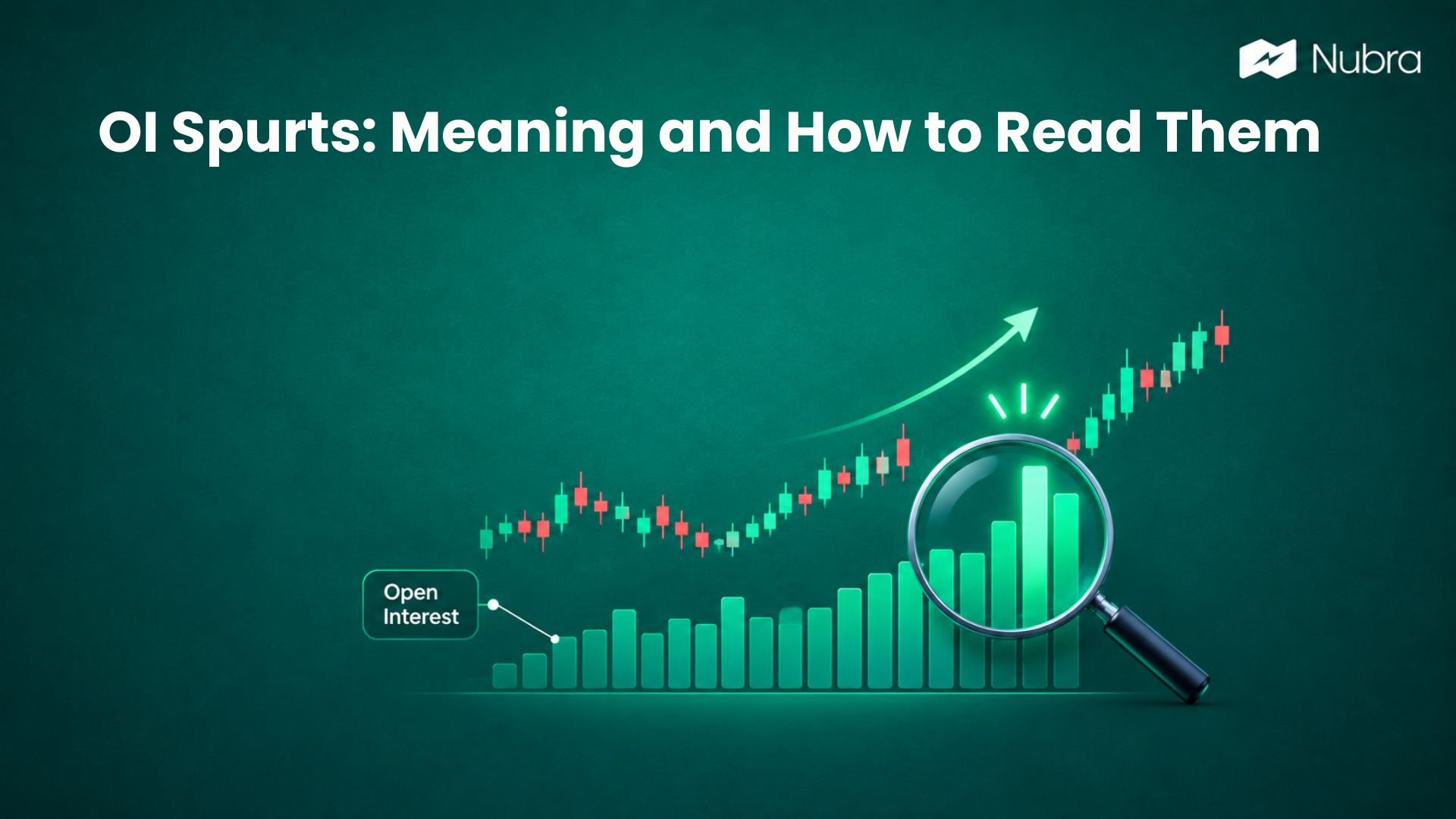
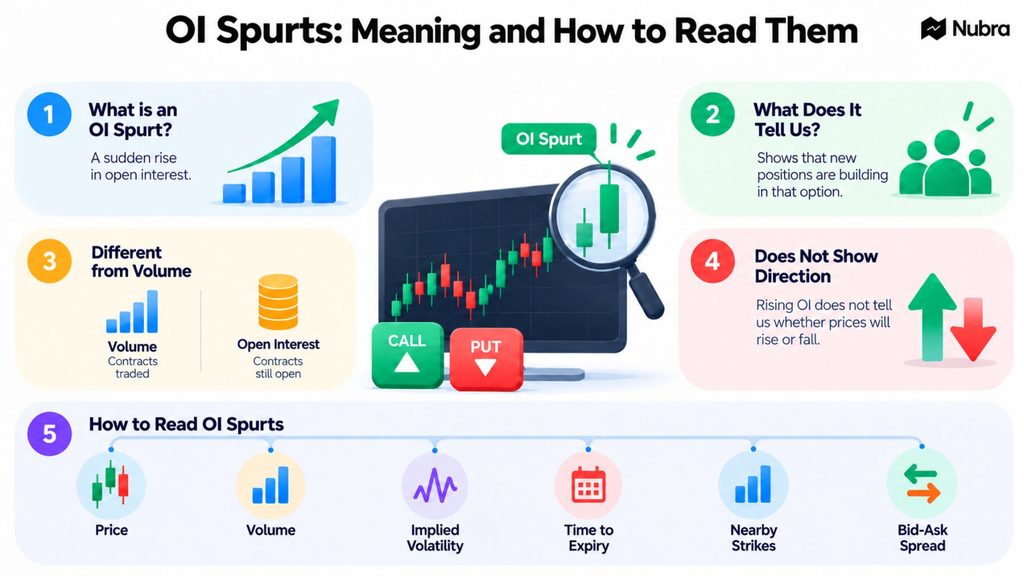
An OI spurt is a sudden rise in open interest: the number of contracts that are still open. It shows us where positions are building quickly. We use it as a starting point for a closer look, not a signal to buy or sell.
What Does an OI Spurt Tell Us?
Open interest tells us how many contracts remain open. Volume tells us how many were traded during a period. So, a busy session does not always mean a large rise in OI.
Every open contract has both a buyer and a seller. Rising OI tells us there are more open contracts. It does not tell us whether traders expect prices to rise, expect them to fall, or are protecting other positions.
How Do We Read OI Spurts?
We compare options for the same stock or index, expiry date and time period. Then we look at three things:
- Size of the change: We check both the percentage rise and the number of contracts added. A large percentage can be misleading when OI starts low.
- Price and volume: We look at trading volume, the option’s price (its premium), and the stock or index price together. OI alone cannot explain the move.
- Volatility and time: We also consider implied volatility, which reflects expected price movement, and the time left before expiry. Our guide to the options Greeks explains how these affect premiums.
We check nearby strike prices too, along with the gap between buying and selling quotes. High OI does not guarantee that a trade will be easy to enter or exit.
An OI Spurt Example
Suppose a Nifty call option’s OI rises from 10,000 to 12,500 contracts. We have 2,500 more open contracts: a 25% increase. Its premium also rises from ₹100 to ₹110.
Both figures have risen, but that does not mean Nifty will rise next. Some traders may be protecting other positions, while volatility may also affect the premium. We need more context before drawing a conclusion.
Reviewing OI Activity With Nubra
We can start with Nubra’s Option Chain to compare strikes, then use Nubra’s Charts to examine price movements. With Nubra’s Strategy Builder, we can explore how a strategy might perform under different scenarios. These tools help us analyse a setup; they do not guarantee results.
FAQs
Are OI Spurts Bullish or Bearish?
Neither on their own. We need to look at price, volatility and what else is happening in the market.
Is a Premium Jump the Same as an OI Spurt?
No. Premium is the option’s price. OI counts open contracts. We check them separately.
How Do We Calculate the Percentage Change in OI?
We divide the increase in OI by the starting OI, then multiply by 100. A rise from 10,000 to 12,500 contracts is 25%.
Can Trading Volume Rise Without a Similar Rise in OI?
Yes. Volume includes both opening and closing trades. We can see heavy trading without a large increase in the contracts left open.
Does High OI Mean an Option is Easy to Trade?
Not necessarily. We also check trading volume and the gap between buying and selling quotes to assess how easily we might enter or exit.
What Should We Check After Spotting an OI Spurt?
We review the option premium, stock or index price, volume and volatility. We also compare nearby strikes for the same expiry before drawing conclusions.
Disclaimer: The information provided in this blog is for educational and informational purposes only and should not be construed as investment advice, financial advice, or a recommendation to buy, sell, or hold any securities or financial products. Investments in the securities market are subject to market risks. Please read all related documents carefully before investing. Readers should conduct their own research and consult a SEBI-registered investment adviser or other qualified financial professional before making any investment decisions. Past performance is not indicative of future results.