
title: "Inside the Exchange Black Box: How Colocation Turns Order Books into a Nanosecond Battlefield" summary: "What really happens after you place an order, how colocation cages shape order books, and why modern trading systems are built around deterministic exchange infrastructure." tags: ["Algo Trading", "Execution & Order Management", "Infrastructure", "Market Data", "Platform Reliability", "Trading Infrastructure"] readTime: "8 min" publishDate: "2026-02-16" author: "Aryan : Algo Trader & Analyst"#
The World Your Order Enters#
Every time you place an order, discretionary or algorithmic, it enters a world you are never allowed to see.
No humans.
No screens.
No manual intervention.
Only machines processing orders at microsecond and nanosecond scale inside tightly controlled exchange infrastructure.
This hidden layer, commonly referred to as the exchange black box, lives inside what traders and infrastructure teams simply call the cage.
Understanding what happens inside the cage, and how order books are built and updated there, is foundational for anyone building serious trading systems in today's API-driven markets.
Colocation in One Line#
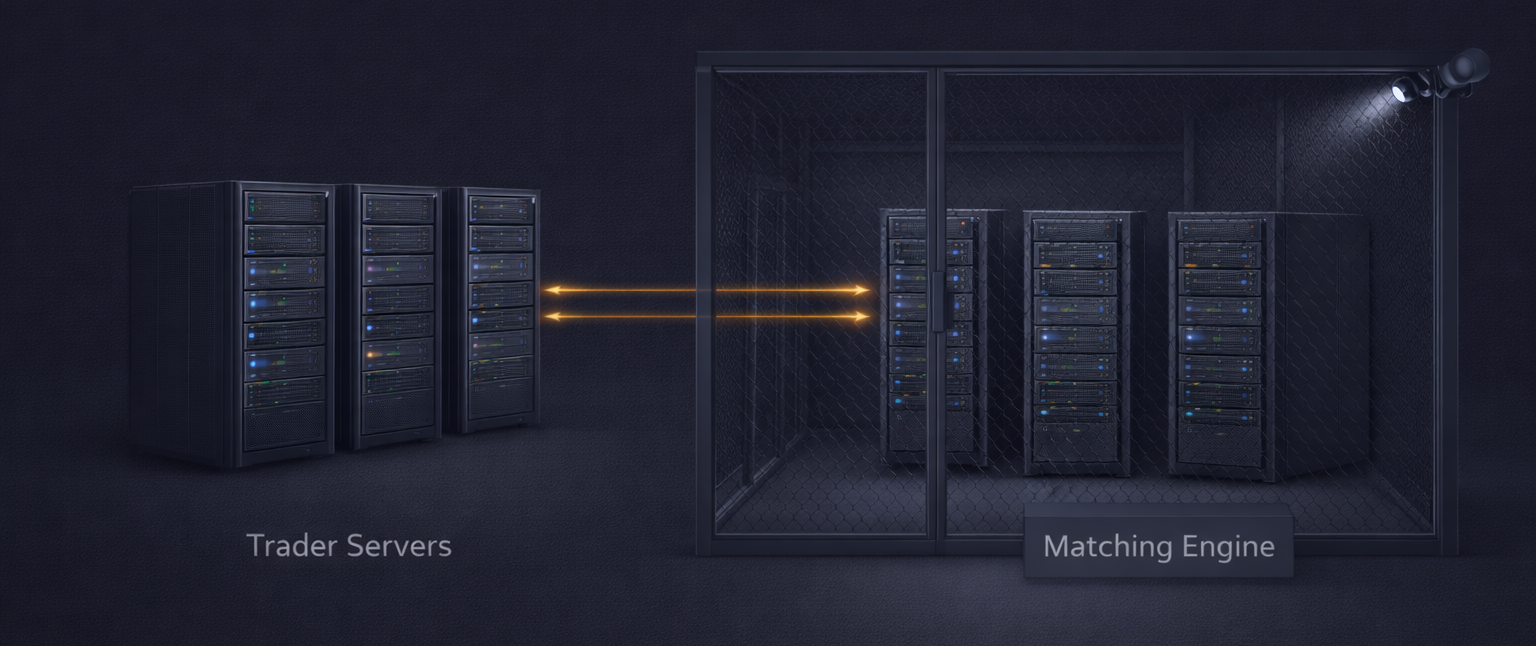
Colocation, or colo, means placing your trading servers inside or extremely close to the exchange's cage so orders reach the matching engine with minimal and predictable latency.
That single design decision is what turns order books into a nanosecond battlefield.
Inside the Exchange Cage#
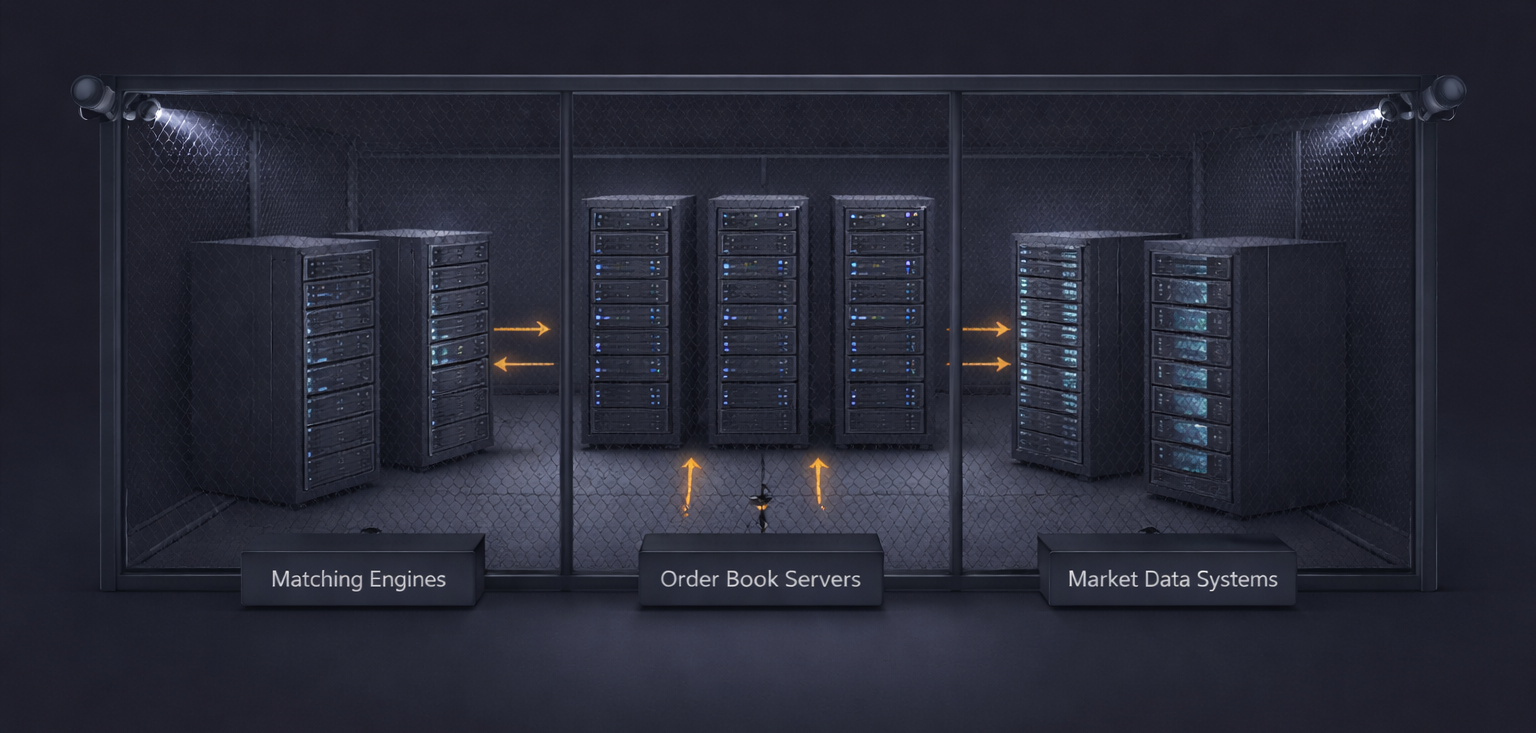
At the core of every modern exchange is a sealed execution environment known as the cage. It hosts:
- Matching engines
- Order book servers
- Market data dissemination systems
- Sequencing, timestamping, and risk controls
Once an order enters the cage, it is handled exclusively by deterministic code until execution or rejection.
No human sees the order.
No manual action can influence it.
This is how exchanges enforce fairness and consistency. Not through discretion, but through software and audit trails.
The Order Book, the Market's Living State#
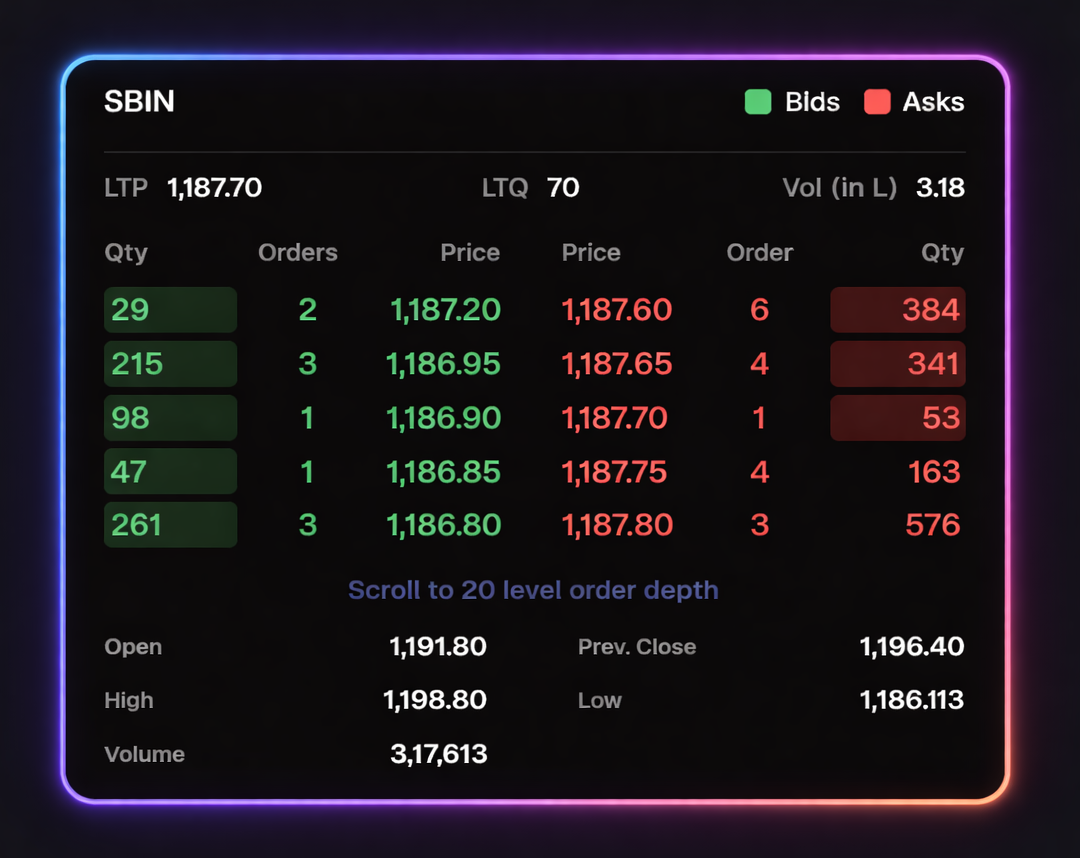
The order book is not just data on a screen.
It is the live, authoritative state of the market inside the cage.
It continuously maintains all active buy and sell orders, organized strictly by price and time priority.
Each order in the book carries:
- Side (buy or sell)
- Price
- Remaining quantity
- Exchange-assigned timestamp
The best bid and best ask together define the spread. This is the most sensitive and information-dense signal produced by the exchange.
Every strategy ultimately competes for position inside this structure.
Price-Time Priority, the Rule That Governs Everything#
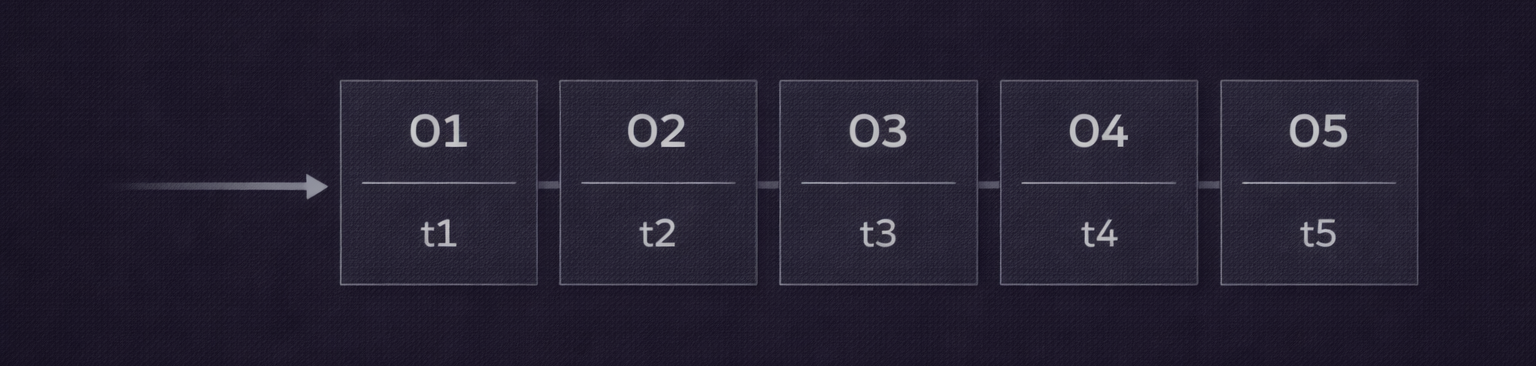
Matching engines inside the cage follow a single rule set.
First, better price wins.
Second, earlier time wins.
Two identical orders submitted milliseconds apart are not equal. Queue position decides who trades and who waits.
This is why latency discipline matters. Retry behavior matters. Deterministic order submission matters more than clever indicators.
At scale, trading becomes a competition for position in the order book, not prediction alone.
From Algo to Cage, the Order Data Pipeline#
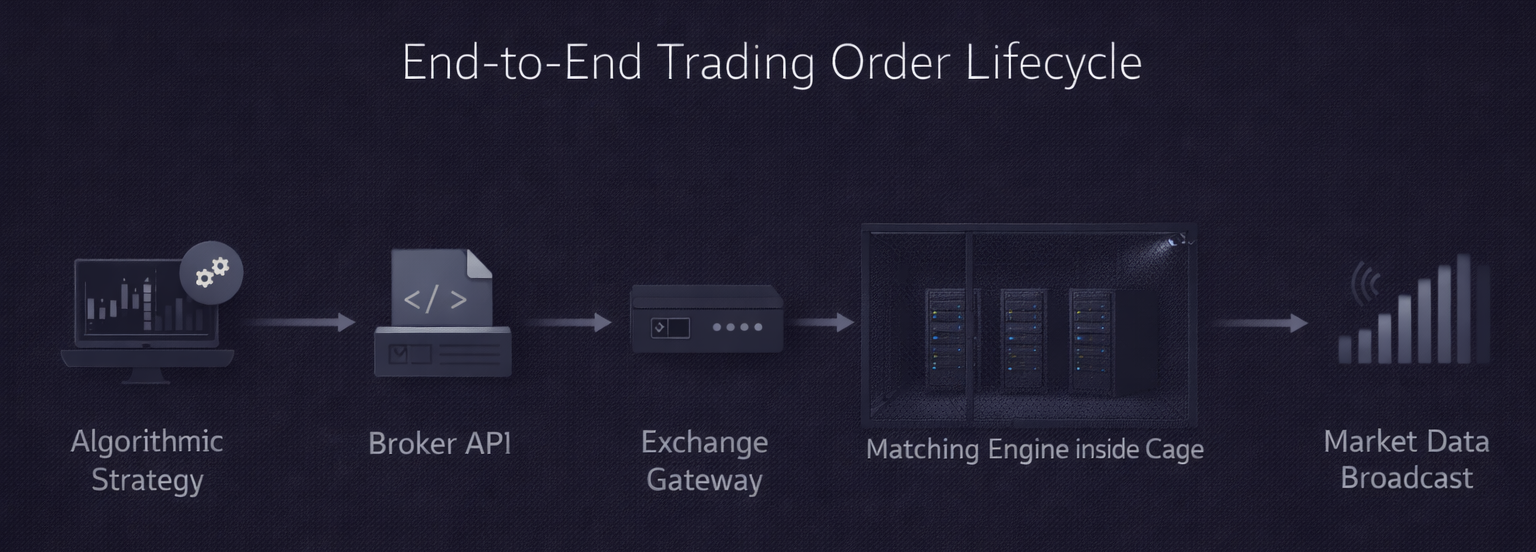
An order's journey into the cage typically follows this path:
- Strategy Layer: The algo decides instrument, side, price, and quantity.
- Broker or API Layer: Authentication, margin checks, and validations are applied.
- Exchange Gateway: Orders are sequenced, timestamped, and routed inward.
- Matching Engine Inside the Cage: Orders are inserted into the order book and matched.
- Market Data Broadcast: Updated order book state and trades are published outward.
The entire cycle completes in microseconds, but every layer introduces potential failure points if not handled with care.
This is where execution-focused infrastructure becomes critical.
Why the Order Book You See Is Always Slightly Old#
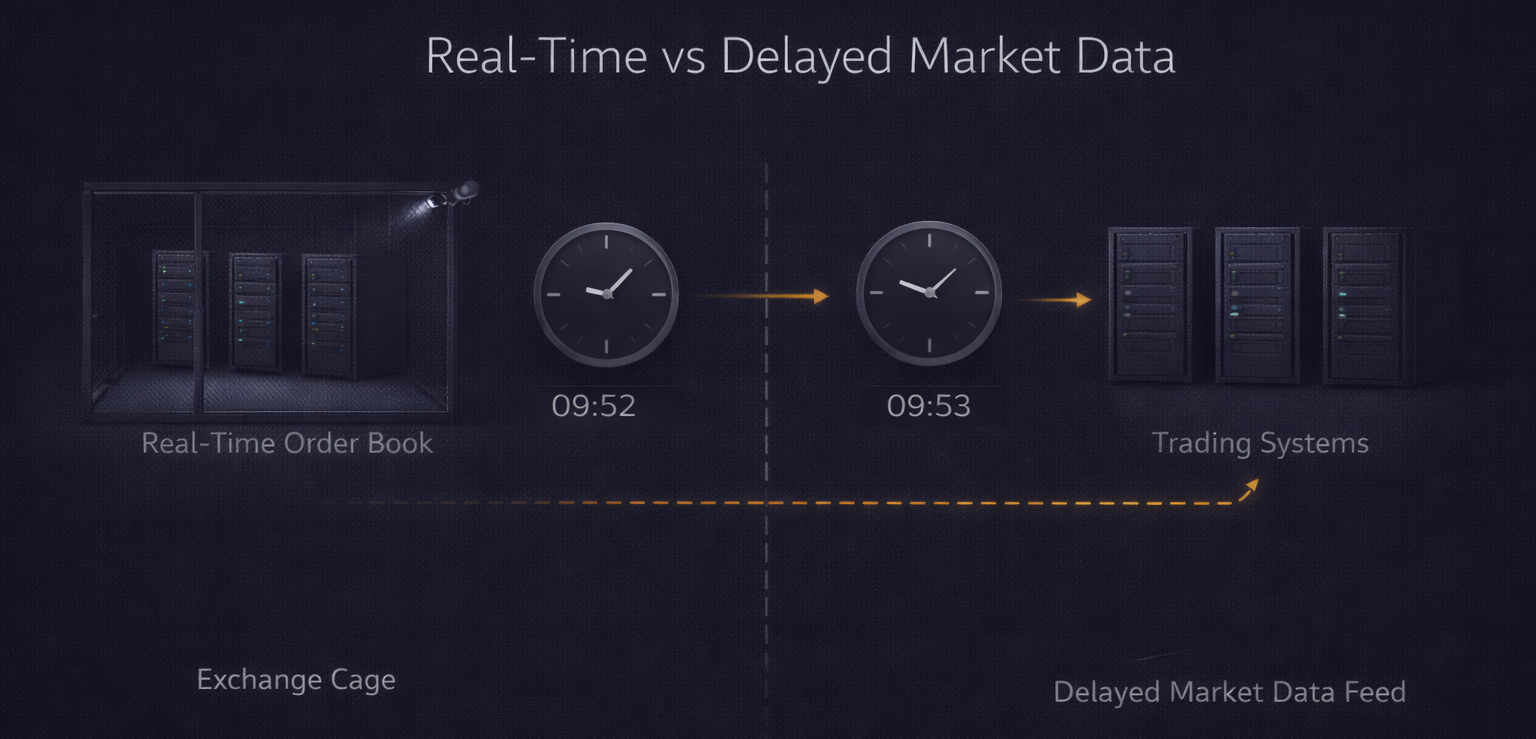
A subtle but crucial reality of electronic markets is that you never see the order book as it exists inside the cage. You only see a slightly delayed representation.
Delay is introduced by network propagation, feed aggregation, normalization, serialization, decoding, and local processing.
As a result, profitable systems do not blindly react to visible depth. They reason about queue position, execution probability, and adverse selection.
Understanding the gap between cage state and observed state separates reactive systems from robust ones.
Nubra's Role Around the Cage#
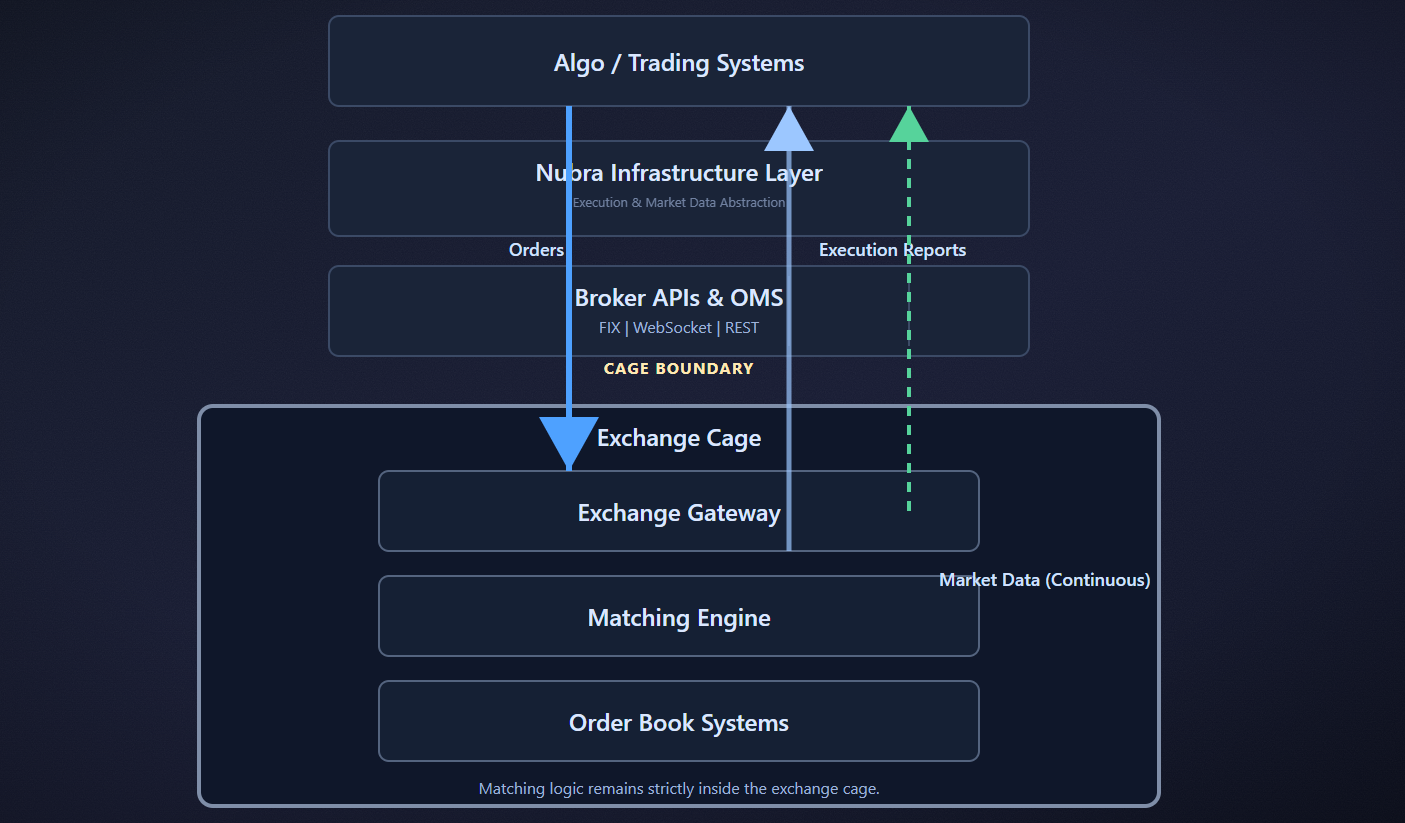
Nubra does not sit inside the exchange cage, and it does not alter how matching engines work.
Its role is to ensure stability and correctness around the cage by:
- Normalizing broker-specific order and market data models
- Providing reliable order placement, modification, and cancellation flows
- Handling reconnects, retries, and session recovery safely
- Preserving execution determinism across restarts and failures
This ensures that a trader's understanding of order book behavior translates cleanly into actual market interaction without being distorted by fragile APIs or broken sessions.
In practice, Nubra helps your system behave predictably at the cage boundary.
Why This Understanding Changes How You Trade#
Once you understand how order books are constructed inside the cage, how matching engines enforce price and time priority, and where latency truly impacts outcomes, your questions change.
You stop asking why an order did not fill.
You start asking where you were in the queue when the market moved.
That shift marks the transition from strategy-first thinking to execution-aware trading.
Final Thoughts#
Markets are not charts.
Markets are distributed, deterministic systems.
Colocation compresses distance to the cage.
The cage enforces fairness through code.
The order book represents market state, not market intent.
If you are building algos or execution systems, this pipeline is not optional background knowledge.
It is the foundation everything else rests on.
Important Disclaimer#
Warning: Educational Use Only
- Not financial advice
- Not a trading recommendation
- Exchange behavior simplified for learning purposes
- Always follow exchange, broker, and regulatory guidelines
Related Posts#
- From SMS OTP Delays to Server-Ready Sessions
- Trading APIs: What Developers Think Happens vs What Exchanges Actually Do
- Why Queue Position Matters More Than Entry Price