
Place order is not an order lifecycle. It is one step in a risk-sensitive pipeline.
Here's how we recommend you integrate our Trading V2 surface so you get safety, clarity, and fewer production surprises.
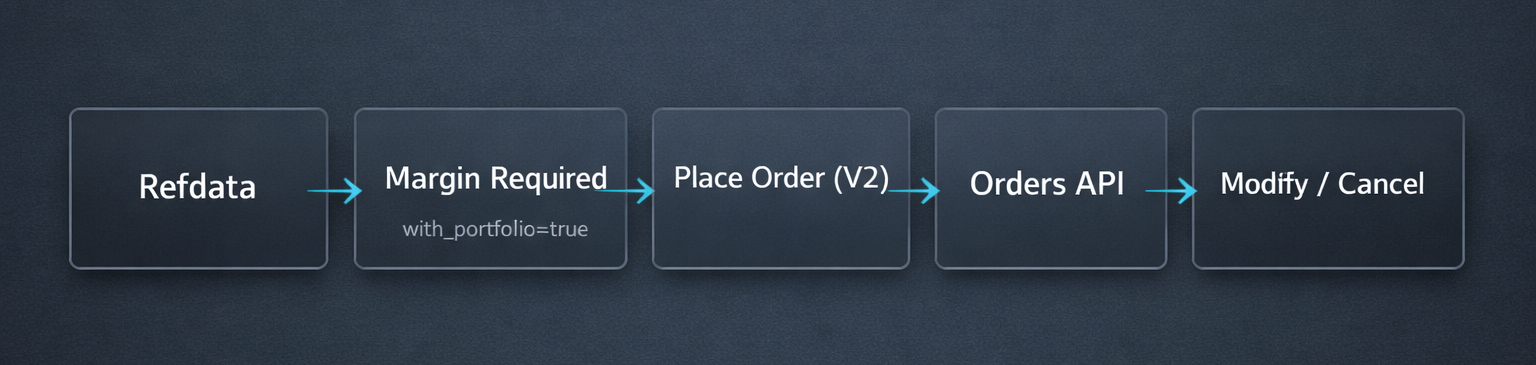
Step 0: Resolve the Instrument via Refdata#
Our trading calls use ref_id. Resolve it for the trading date and exchange before you place anything.
GET /refdata/refdata/{date}?exchange=NSEcurl --location 'https://api.nubra.io/refdata/refdata/2025-06-27?exchange=NSE' \
--header 'x-device-id: TS1234' \
--header 'Authorization: Bearer eyJhbGciOi...'The response includes refdata[] entries with fields like ref_id, lot_size, tick_size, asset_type, and expiry.
Why this matters#
- Refdata is date-scoped
- Lot sizes and expiries affect both margin and order validity
ref_idis the canonical trading identifier in our system
Step 1: Run Margin Estimation Before Placing Orders#
We use the same margin endpoint for both single orders and basket-style margin logic:
POST /orders/v2/margin_requiredThe most important rule here is simple:
Set
with_portfoliototruewhen you want accurate margin.
Single-order margin pattern#
{
  "with_portfolio": true,
  "with_legs": false,
  "is_basket": false,
  "order_req": {
    "exchange": "NSE",
    "orders": [
      {
        "ref_id": 1755599,
        "order_type": "ORDER_TYPE_REGULAR",
        "price_type": "MARKET",
        "order_qty": 75,
        "order_price": 0,
        "order_side": "ORDER_SIDE_BUY",
        "order_delivery_type": "ORDER_DELIVERY_TYPE_CNC",
        "validity_type": "IOC",
        "request_type": "ORDER_REQUEST_NEW"
      }
    ]
  }
}
What to read in the response#
Use total_margin as the authoritative value for order placement. Treat component fields like span and exposure as diagnostic context.
Step 2: Place a Single Order (Trading V2)#
POST /orders/v2/single{
"ref_id": 250486,
"order_type": "ORDER_TYPE_STOPLOSS",
"order_qty": 4,
"order_side": "ORDER_SIDE_BUY",
"order_delivery_type": "ORDER_DELIVERY_TYPE_CNC",
"validity_type": "DAY",
"price_type": "LIMIT",
"order_price": 283,
"tag": "order_test",
"algo_params": {
"trigger_price": 113
}
}Order-type rules that prevent avoidable rejects#
- STOPLOSS requires
algo_params.trigger_price - ICEBERG requires
algo_params.leg_size - Prices are in paise
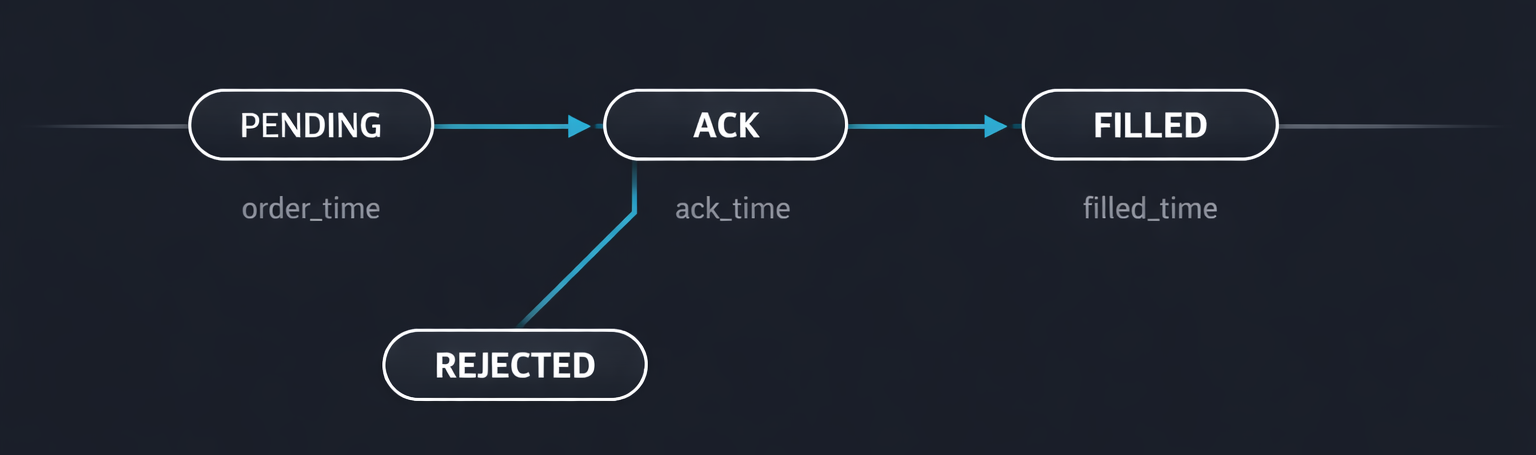
Step 3: Observe Order State (Do Not Guess)#
We expose both broad order inspection and order-by-ID lookups. Use both.
Get orders for the day#
GET /orders/v2?live=1
GET /orders/v2?executed=1
GET /orders/v2?tag=test_order
Get a specific order by ID#
GET /orders/{order_id}You'll see order_status, timestamps like order_time, ack_time, filled_time, and the exchange_order_id when available.
Step 4: Modify or Cancel with the Right Constraints#
Modify order#
POST /orders/v2/modify/{order_id}When you modify, keep the order type requirements intact:
- STOPLOSS modifications require
trigger_priceinalgo_params - ICEBERG modifications require
leg_sizeinalgo_params
{
  "order_qty": 100,
  "order_price": 11800,
  "exchange": "NSE",
  "order_type": "ORDER_TYPE_STOPLOSS",
  "algo_params": {
    "trigger_price": 11380
  }
}
Cancel order(s)#
We support both single cancels and batch cancels:
DELETE /orders/{order_id}POST /orders/cancel
{
  "orders": [
    { "order_id": 1234 }
  ]
}
OPS Guidance Is Part of Correctness#
Our trading rate guidance is not just about performance. It helps you stay inside a stable execution envelope:
- Trading APIs (PROD): 10 ops/sec per IP address
- Trading APIs (UAT): 100 ops/sec
A Minimal, Safe Order Lifecycle Checklist#
- Resolve
ref_idbefore trading - Estimate margin with
with_portfolio: true - Place using the required fields for the chosen order type
- Poll/inspect via the orders endpoints
- Modify/cancel without breaking order-type constraints
- Stay inside the OPS envelope