
Straddles and strangles are volatility trades disguised as direction-agnostic trades.
They work when your volatility view is right and your timing is not embarrassing.
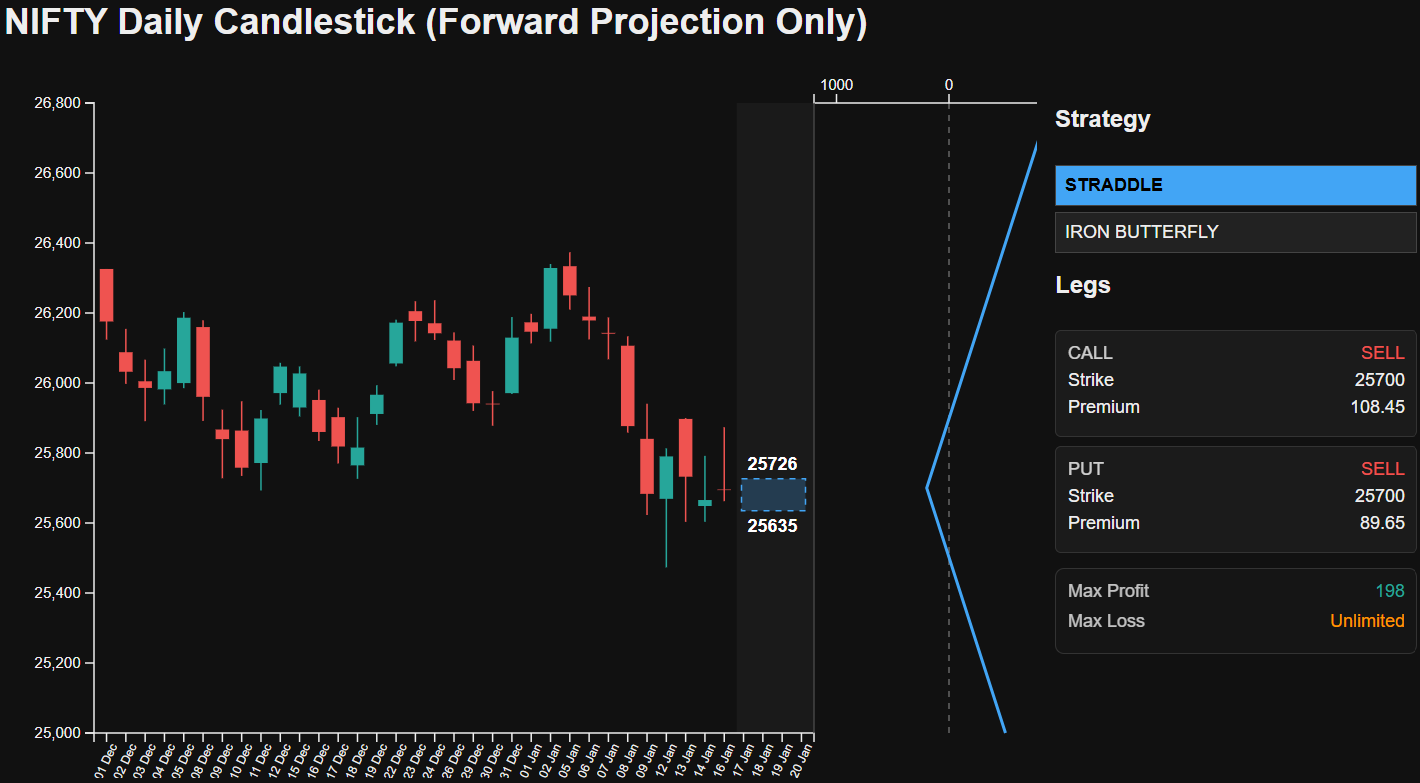
Straddle Payoff and Chart#
Why These Strategies Exist at All#
They exist because traders need ways to express views on movement magnitude rather than direction.
- Long variants buy convexity
- Short variants sell convexity
Everything else is implementation detail and risk management.
Long vs Short: The Real Tradeoff#
A cleaner framing than �risk vs reward� is �path dependency vs terminal dependency.�
- Long straddles/strangles: terminal move must beat premium paid
- Short straddles/strangles: path must avoid violent excursions that break you early
Short vol is rarely �easy.� It is usually just slow until it isn�t.
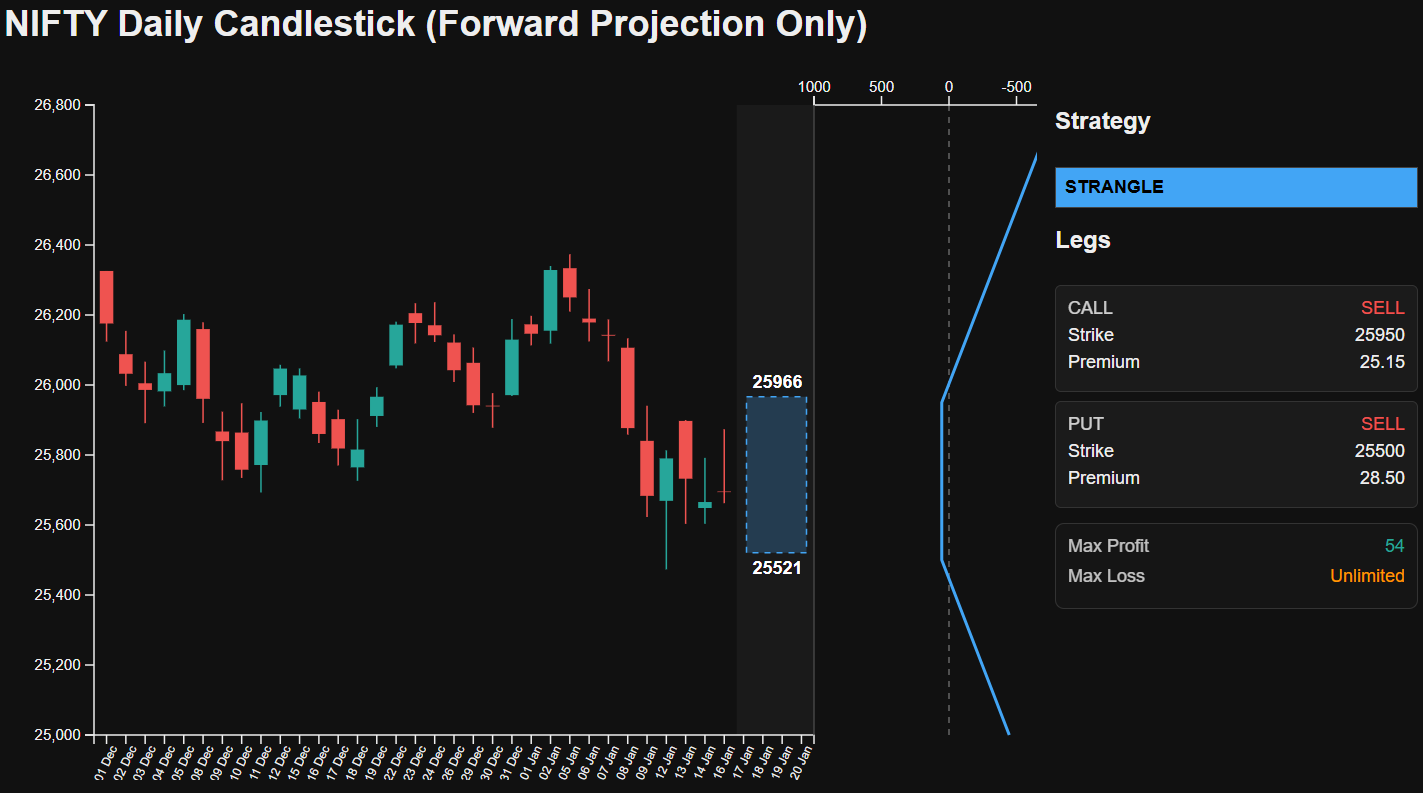
Strangle Payoff and Chart#
ATM vs OTM: Pay for Precision or Pay for Probability#
ATM structures are more sensitive and more expensive. OTM structures are cheaper but need bigger moves.
Use ATM when:
- You expect a meaningful move soon
- You want tighter delta balance
Use OTM when:
- You expect a larger move but want lower upfront premium
- You accept lower responsiveness near spot
Volatility Expectations and IV Risk#
Most straddle mistakes are IV mistakes.
Two recurring traps:
- Buying high IV into known events and eating IV crush
- Selling low IV because �it feels safe� and getting repriced
Your IV view should be explicit before your strike view.
A Small Payoff Calculator You Can Extend Safely#
This keeps the math honest and short.
def long_call(spot, strike, premium):
    return max(0, spot - strike) - premium

def long_put(spot, strike, premium):
    return max(0, strike - spot) - premium

def straddle_payoff(spot, strike, call_prem, put_prem):
    return long_call(spot, strike, call_prem) + long_put(spot, strike, put_prem)

def strangle_payoff(spot, k_put, k_call, put_prem, call_prem):
    return long_put(spot, k_put, put_prem) + long_call(spot, k_call, call_prem)
Short variants are just the negative of these payoffs plus execution and risk constraints you cannot ignore.
Typical Failure Scenarios (That Are Not Theoretical)#
- IV crush: you were right about direction, wrong about pricing
- Range traps: short structures bleed or long structures decay without movement
- Timing errors: movement happened, but not in your holding window
Serious traders do not ask �is it profitable on a chart.� They ask �what breaks first when I am wrong.�