An intraday setup can appear while we are watching another chart. By the time we notice it, the price may have moved. Algorithmic and automated trading lets us turn a defined trading plan into instructions that software can monitor and act on. The value lies in making our process repeatable. We still need to decide…
An intraday setup can appear while we are watching another chart. By the time we notice it, the price may have moved. Algorithmic and automated trading lets us turn a defined trading plan into instructions that software can monitor and act on.
The value lies in making our process repeatable. We still need to decide what to trade, test our assumptions and manage what happens when markets or systems behave unexpectedly. Let’s walk through how that works within a single trading day.
What Does Intraday Algorithmic Trading Mean?
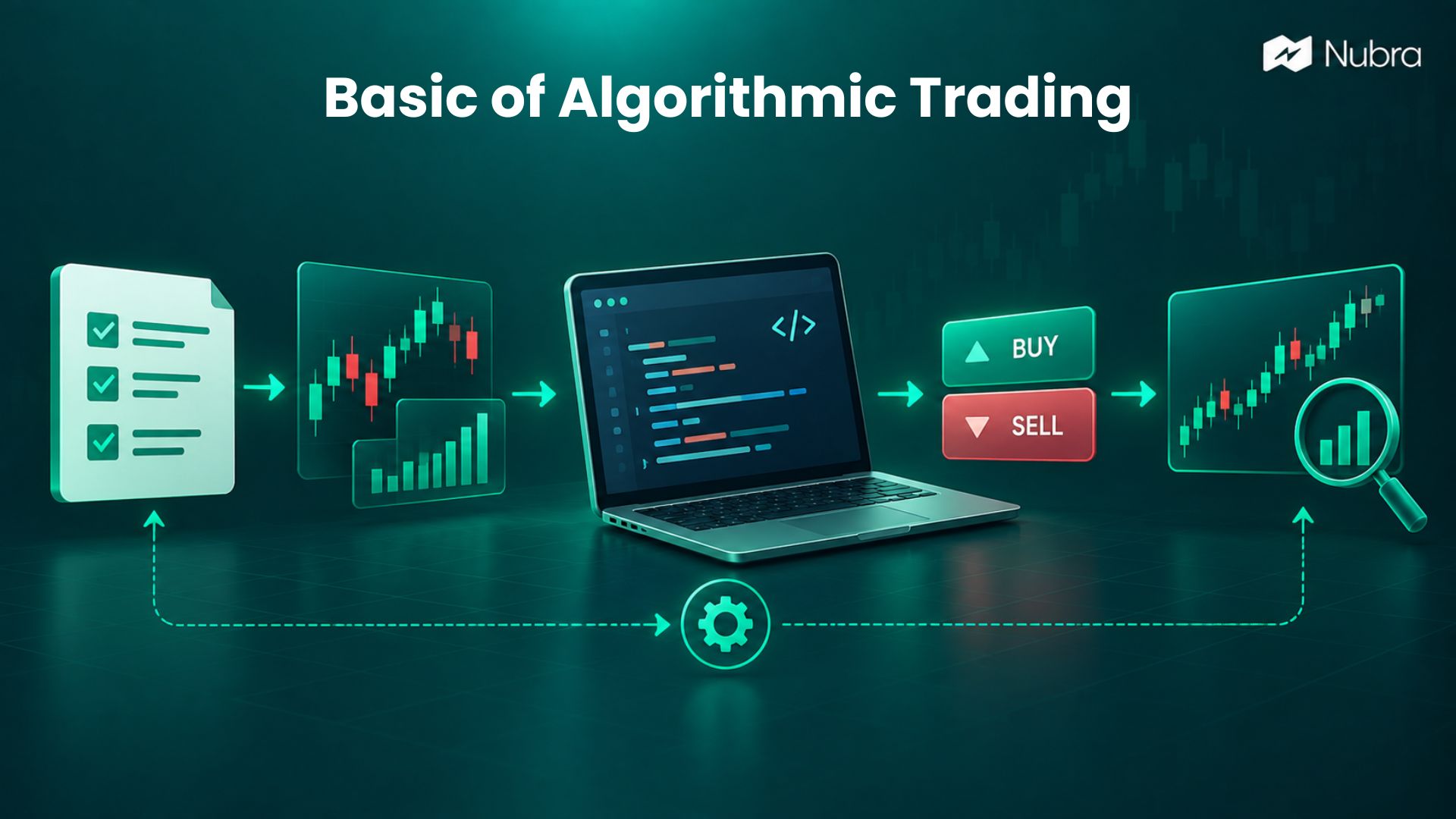
Algorithmic trading uses programmed rules to determine trading actions, such as when to submit an order and how much to buy or sell. For an intraday strategy, we also plan to close positions within the same trading session.
Algorithmic and automated trading often overlap. A useful distinction is between software that only alerts us to a signal and a system authorised to submit orders automatically. An alert still needs our intervention; an automated workflow connects the rules to execution.
Neither guarantees a completed trade. An order can be rejected, remain unfilled or execute only partly. We therefore need to track what actually happened after each instruction.
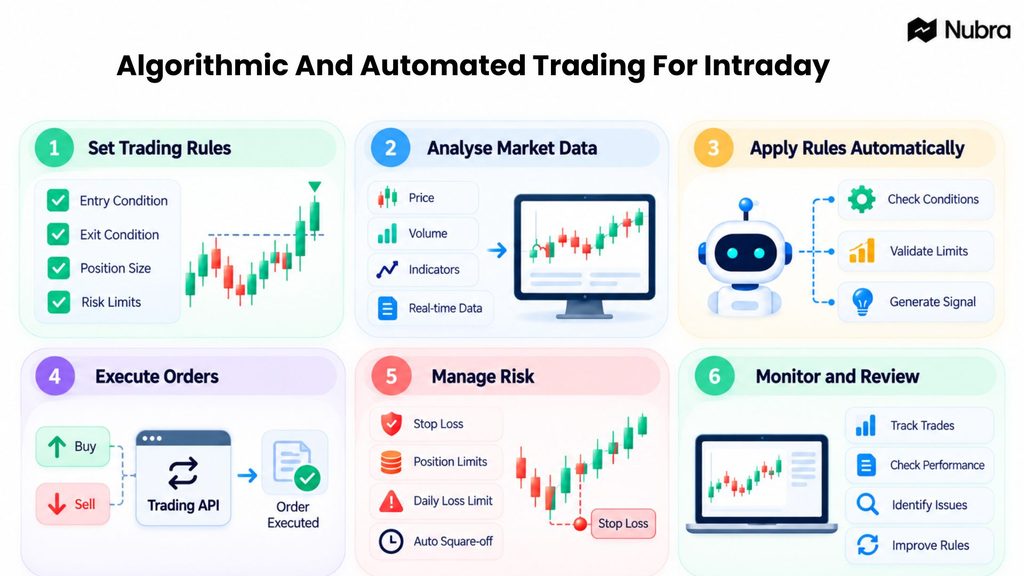
Intraday Algorithmic Trading Strategies
Momentum and Breakout Strategies
Momentum rules look for a price move continuing in the same direction. A breakout is a move beyond a defined range, such as the opening range of a session.
For example, we might test a hypothetical rule that generates a signal when a five-minute candle closes above the first 15 minutes’ high, with a volume filter. We would also define an exit, position size and last entry time.
A brief move above the range may reverse. Waiting for a completed candle changes the signal, but does not remove false breakouts. The example describes a testable idea, not a recommended trade.
Mean Reversion
Mean reversion starts with the expectation that a price stretched away from a chosen average may move back towards it. We could study deviations from a moving average or the volume-weighted average price (VWAP), which weights traded prices by volume.
The important word is “may”. A stock reacting to fresh news can keep moving away from its average. Our rules need an exit for that situation rather than repeatedly adding to a losing position.
Arbitrage and Market Making
Arbitrage seeks to capture price differences between related instruments or markets. Market making involves quoting buying and selling prices, aiming to earn the spread between them.
Both demand careful execution. One side may fill while the other does not, leaving an unwanted position. Costs, access requirements and competition also matter. We should not treat these as simple starting strategies or assume that a visible price gap is an available profit.
How We Build an Intraday Trading system
1. Make the Rules Unambiguous
“Buy when the chart looks strong” cannot be tested consistently. We need a defined instrument, timeframe, entry condition, exit condition and quantity. We also specify whether another entry is allowed after a loss.
For intraday trading, our plan includes a time to stop opening positions and a process for closing existing ones. That timing must account for the instrument’s session and the broker’s applicable square-off policy.
2. Connect Data, Decisions and Execution
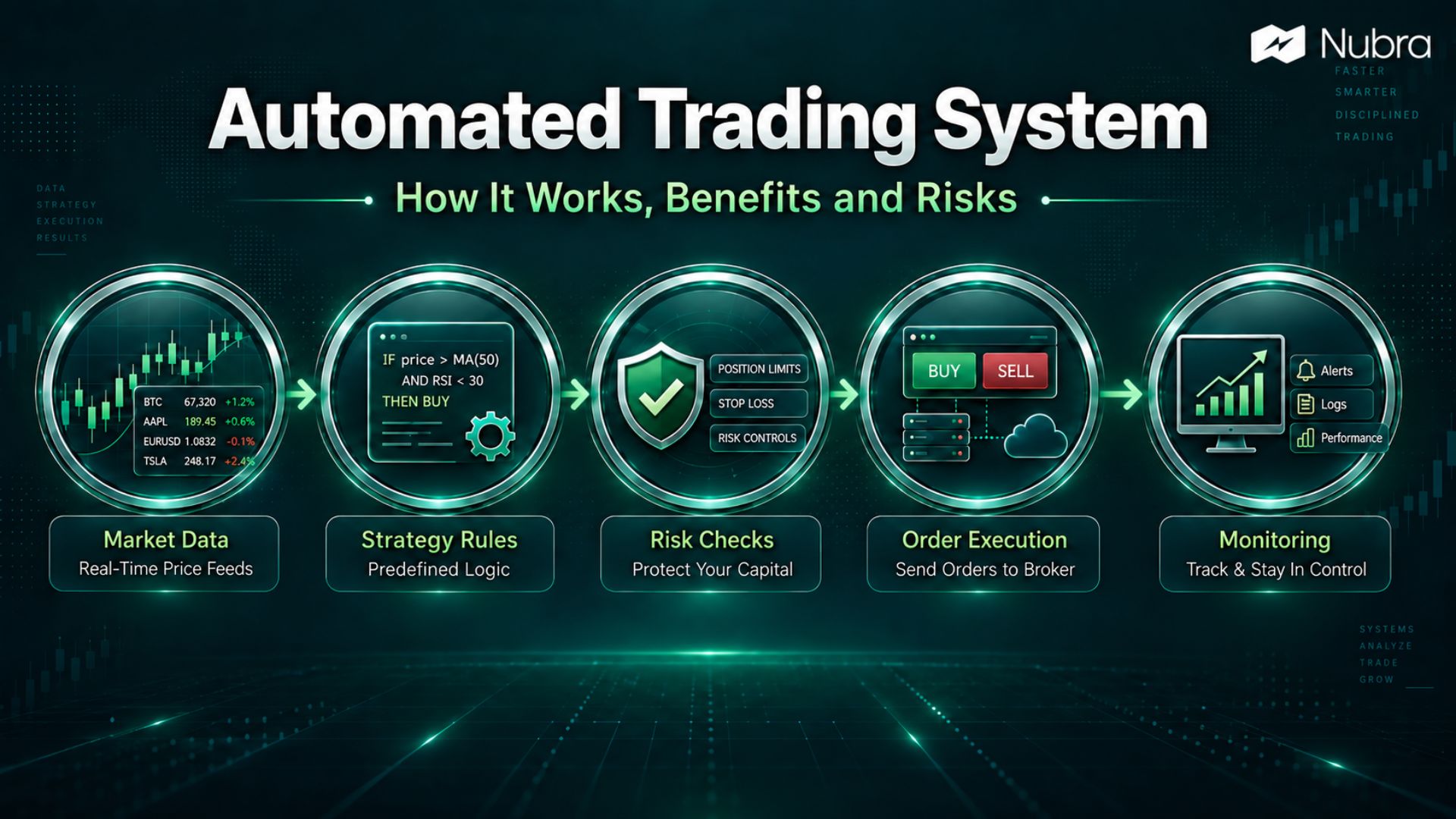
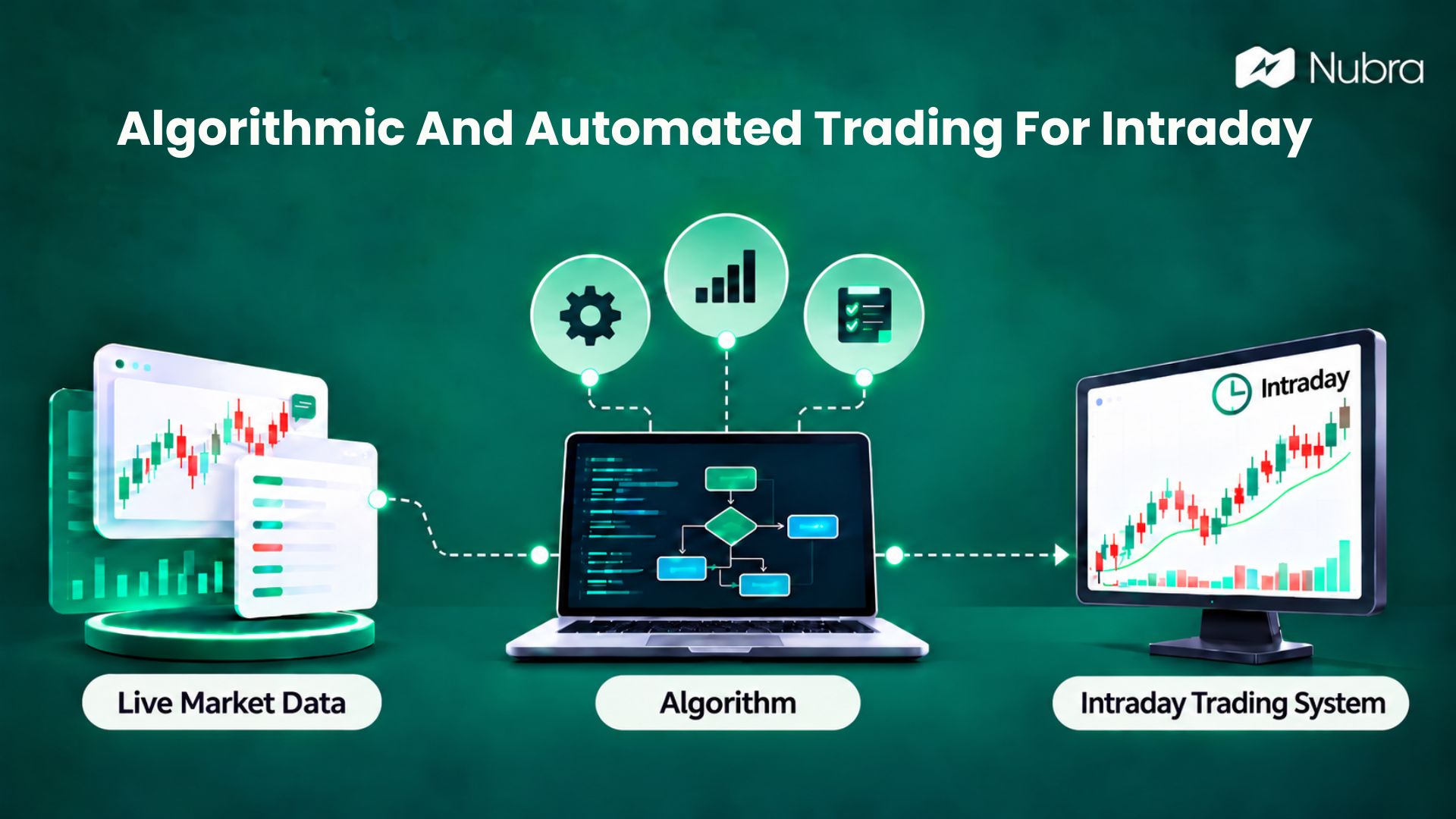
A typical system receives market data, evaluates our rules, checks limits and sends order requests through a broker’s trading API. An API is the interface through which our software communicates with the broker.
We then compare order updates with our expected position. A delayed response should not automatically trigger another identical order: the first request may already have been accepted. Nubra’s developer guides cover market-data and order-update workflows.
3. Define When the System Must Pause
Our controls can include a maximum position size, a daily loss threshold and a limit on new entries. We also need a response to stale prices, repeated order rejections or a broken connection.
Pausing new orders does not close an existing position. The recovery plan must separately address pending orders and open exposure. A stop-loss instruction also cannot guarantee the planned exit price or a completed exit.
Backtesting: What We Need to Check
Backtesting applies our rules to historical data to estimate how they would have behaved. It helps us examine an idea before risking capital, but a strong result is not proof of future performance.
We account for brokerage, applicable charges, the bid–ask spread and slippage: the difference between an expected and actual execution price. For illustration, a ₹600 gross trading gain becomes ₹250 after ₹350 in combined costs and execution differences. These are hypothetical figures, not Nubra charges.
Data timing matters too. If our signal needs a candle’s closing price, the test cannot assume an entry before that price was known. For options, we also need the correct historical contract, expiry and price data.
Repeatedly changing settings until one historical period looks impressive can produce overfitting: rules that match past noise. We reserve unseen data for testing and examine drawdown, the decline from a previous account-value peak, alongside returns and trade counts.
Next, paper trading lets us observe signals on incoming data without placing real trades. It can reveal timing and workflow problems, although simulated fills may differ from live execution.
Benefits and Limits of Automated Intraday Trading
Automation can apply our rules consistently, monitor several instruments and reduce repetitive order-entry work. It also creates records we can review to understand why a signal or trade occurred.
However, it can repeat a flawed rule just as consistently. Human judgement still shapes the strategy, its settings and decisions to override it. We cannot assume automation removes bias.
Connectivity failures, changing market conditions and frequent trading costs can undermine results. Our review therefore continues during and after the session: compare expected trades with actual fills, investigate differences and retest meaningful changes before deployment.
Exploring Intraday Automation with Nubra
Once we have defined the strategy and its controls, we can explore the integration. Our Nubra API documentation covers the Python SDK and REST API for programmatic access to market data and trading workflows.
The API FAQs explain getting started and supported capabilities. We should verify the current requirements for our intended setup. API access connects a strategy to trading infrastructure; it does not establish whether that strategy has an advantage.
FAQs
Which Algorithm is Best for Intraday Trading?
There is no universally best algorithm. We evaluate a strategy against its instrument, market conditions, execution assumptions and costs, including periods when it loses money.
Do We Need Coding Skills for Automated Trading?
A custom API system generally requires programming and testing skills. Some platforms offer visual rule builders, but we still need to understand and validate the logic. Nubra’s documented integration options include Python and REST.
Is Intraday Algo Trading Allowed in India?
India has a framework for retail algorithmic trading through brokers. Before deployment, we need to confirm the applicable broker and exchange requirements, including access, authentication and any strategy-registration obligations. API access alone is not approval for every setup.
Disclaimer: The information provided in this blog is for educational and informational purposes only and should not be construed as investment advice, financial advice, or a recommendation to buy, sell, or hold any securities or financial products. Investments in the securities market are subject to market risks. Please read all related documents carefully before investing. Readers should conduct their own research and consult a SEBI-registered investment adviser or other qualified financial professional before making any investment decisions. Past performance is not indicative of future results.