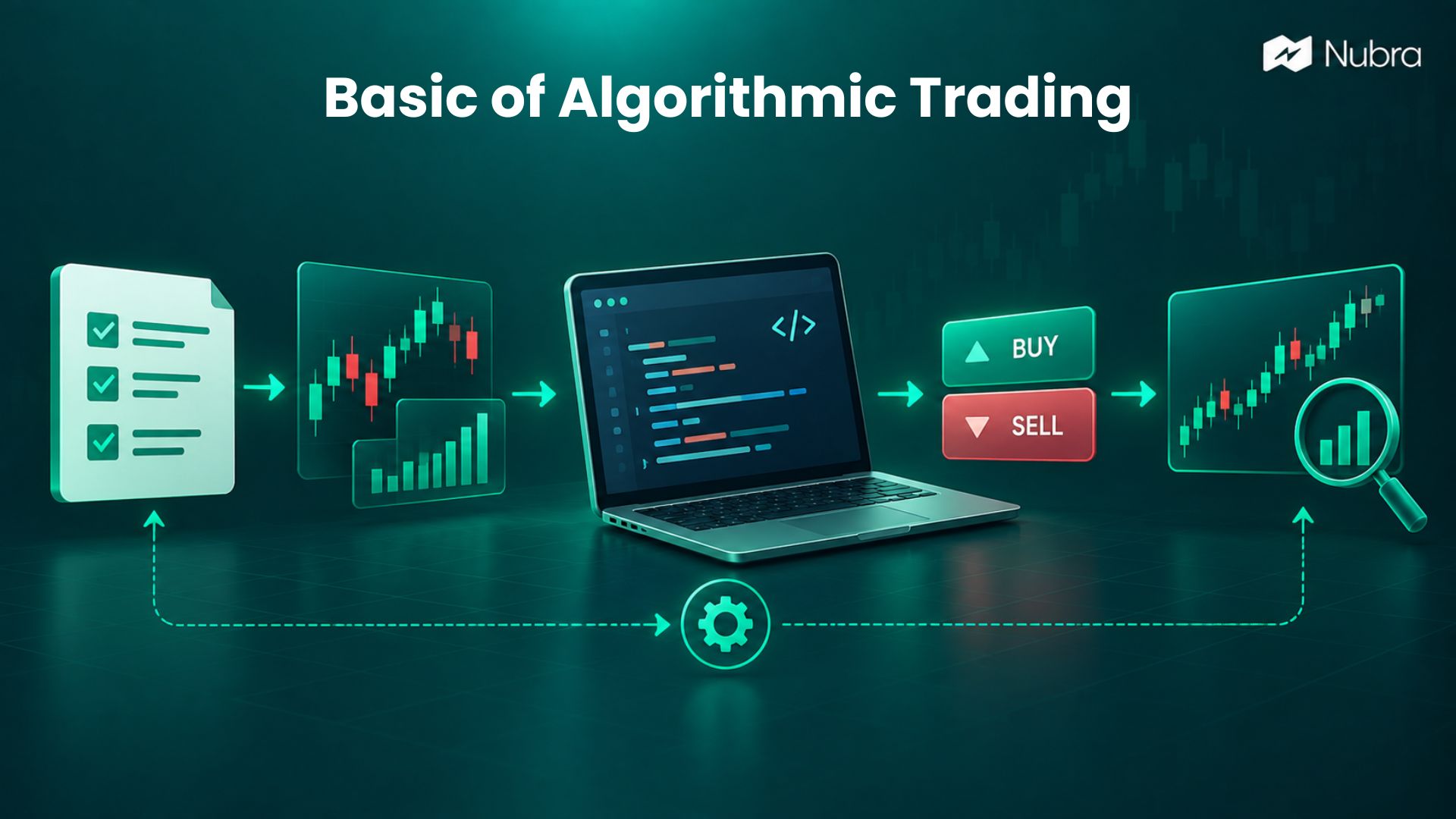
An automated trading system is software that turns predefined trading rules into orders. It receives market data, checks whether specified conditions are met, and sends orders through a connected trading platform or broker. When we automate a trading workflow, we decide the rules before the trade rather than manually acting on every signal. Those rules…
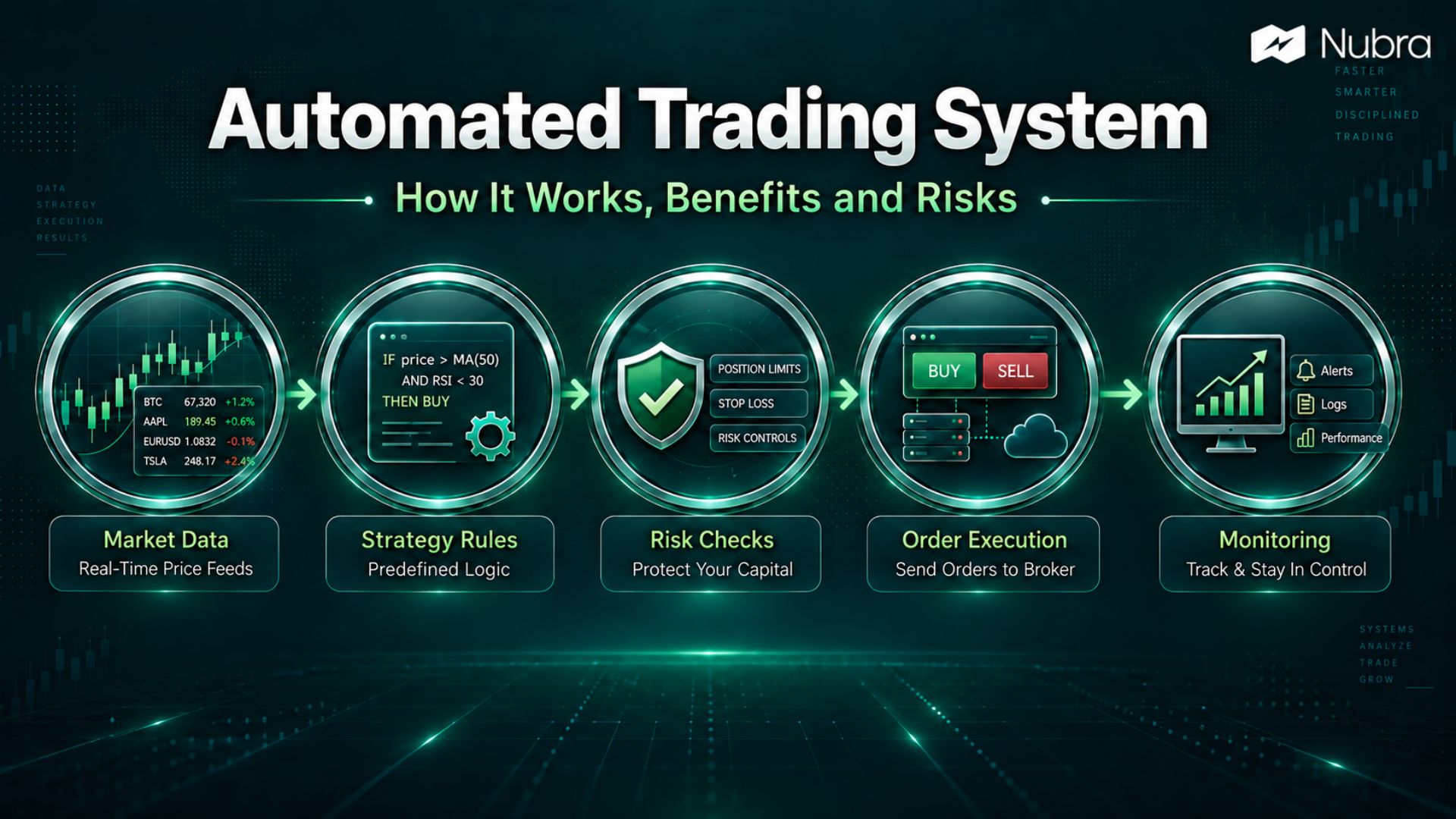
An automated trading system is software that turns predefined trading rules into orders. It receives market data, checks whether specified conditions are met, and sends orders through a connected trading platform or broker.
When we automate a trading workflow, we decide the rules before the trade rather than manually acting on every signal. Those rules can cover entry, exit, trade size and when the system must stop. Automation can make execution more consistent, but it cannot make a weak strategy profitable or remove market risk.
To understand these systems, we need to follow the whole process: how a signal becomes an order, how we test the logic, and what happens when live trading differs from the plan.
How Does an Automated Trading System Work?
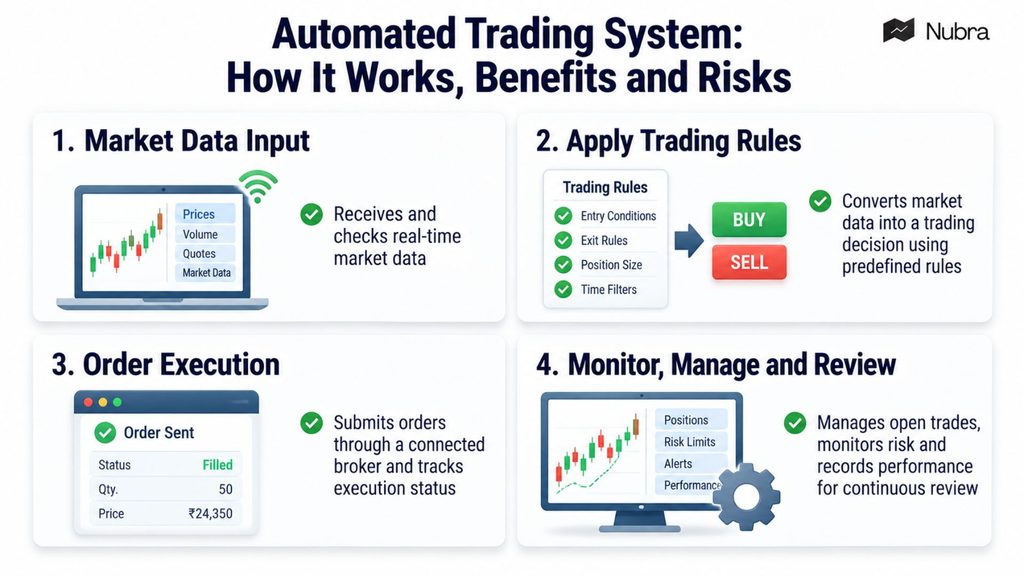
We can break the process into five connected stages. Each stage needs clear inputs and a defined response when something goes wrong.
1. Receive and Check Market Data
The system starts with information such as prices, traded volume or quotes. An options workflow may also use the underlying price, expiry and contract details.
Before acting, we need to know whether that information is usable. A price from several minutes ago can look valid on screen while being unsuitable for a current decision. Missing updates, incorrect timestamps or the wrong contract can change what a signal means.
2. Apply the Strategy Rules
The strategy converts observations into a decision. For example, a rule might detect a price moving above a recent range. Another rule might prevent entry outside a specified time window.
We need precise definitions. “Buy when the market looks strong” leaves room for interpretation. A condition based on a stated price level, time period and confirmation method is something software can evaluate consistently.
3. Check Risk and Trading Limits
A signal should pass the system’s checks before an order is submitted. These might include permitted instruments, position size, existing exposure and available funds or margin.
We also need rules that prevent repeated entries from the same signal. Otherwise, a condition that remains true across several updates could produce several orders when only one was intended.
4. Submit the Order and Track its Status
A trading API is an interface through which software can communicate with a broker’s systems. Sending an order request is only one part of execution: the request may be rejected, remain pending or receive a partial fill.
We therefore track confirmed order status and actual positions. Treating “request sent” as “trade completed” can leave the strategy working with a position that does not exist.
5. Manage the Position and Record Events
After entry, the system follows its exit and monitoring rules. Logs should make it possible to understand the signal, checks, order response and subsequent actions.
Our responsibility continues while the system runs. Alerts and a defined way to stop new orders help us respond when actual behaviour differs from the design.
An Example of an Automated Trading Workflow
Suppose we are studying a hypothetical breakout strategy using a Nifty futures contract. This is an illustration of system design, not a recommendation to trade it.
We first define the observation period and the price level that would trigger a signal. We then specify the contract, permitted trade size, entry conditions and exit logic. The design also needs instructions for rejected orders and a time after which no new entries are allowed.
Imagine the price crosses the trigger, but the market-data feed stops updating before the order is sent. A rule based only on price might still act. A workflow that also checks data freshness can pause and flag the problem.
Now imagine an order fills only partly. Our exit logic must use the quantity actually filled, not the original requested quantity. These details rarely appear in a simple strategy description, but they determine whether the software behaves as intended.
Automated Trading, Algorithmic Trading and HFT
These terms overlap, but they describe different aspects of a trading workflow.
An algorithm is a set of instructions. In trading, it can help generate signals, decide quantities or schedule execution. An automated trading system connects those instructions with data, order handling and monitoring.
High-frequency trading, or HFT, involves specialised approaches built around very fast market interaction. We do not need an HFT setup to automate a strategy that checks conditions at longer intervals.
The useful question is how much of our process is automated. A tool that sends an alert still leaves the order decision with a person. A system that submits orders automatically carries additional execution and monitoring responsibilities.
Common Approaches to Automated Trading
Different strategies need different assumptions. We should understand those assumptions before considering how to automate them.
Trend Following
Trend-following rules respond to an observed price direction. Moving averages and breakouts are common ways of expressing that idea.
The difficulty is that a market can change direction repeatedly. We may see several losing signals in a sideways period, even when the software follows every instruction correctly.
Mean Reversion
Mean-reversion strategies look for a move back towards a reference level after a deviation. The reference might be an average price or a modelled relationship.
A deviation does not guarantee a reversal. If conditions change, the old reference may stop being useful. Our testing therefore needs to examine periods when the relationship breaks down.
Scheduled Execution
Some algorithms focus on how an existing order is executed rather than predicting market direction. For example, an execution schedule can divide a larger quantity into smaller orders over time.
We still need to consider liquidity, price movement and completion risk. Splitting an order does not guarantee a better average price.
Options and Hedging Workflows
Options automation can involve several contracts and changing exposure. A hedge rule may respond to delta, which estimates how an option’s value changes as the underlying price changes.
For a multi-leg strategy, we need to consider what happens if one leg fills and another does not. The intended combined position and the temporary live position can carry very different risks.
What are the Benefits of Automation?
Automation helps us apply written rules repeatedly. It can handle routine checks, record decisions and reduce the need to manually enter every order. A defined process also makes it easier to investigate why a trade occurred.
Another benefit is consistency between the strategy description and its execution. We can test whether the code follows the rules instead of relying on memory after a trading session.
However, human judgement remains part of the process. We choose the data, assumptions and parameters. Changing settings after every loss can introduce the same emotional decisions that automation was meant to contain.
How We Test an Automated Trading System
Testing should answer two separate questions: does the strategy have a credible basis, and does the software behave correctly?
Backtest with Realistic Assumptions
A backtest applies rules to historical data. It gives us hypothetical results, not evidence that the same outcome will occur in live trading.
We need to account for relevant charges, the gap between buying and selling quotes, and slippage—the difference between an expected price and the actual execution price. A result that depends on perfect fills deserves particular scrutiny.
Data timing matters too. A decision simulated at a particular moment must not use information that only became available later.
Check Performance Beyond the Development Sample
Repeatedly changing rules until a historical chart looks attractive can lead to overfitting. The system may be matching noise in that sample rather than a pattern that continues.
We can reserve separate periods for evaluation and examine different market conditions. Alongside returns, we should understand losses, trading frequency and drawdown: the fall from a previous peak in the account’s value.
Test Software Failures as Well as Signals
A useful test plan includes missing data, rejected orders, partial fills and lost connections. We also need to check what happens after the program restarts.
For example, an order request can time out while the broker has already received it. Resending immediately could create a duplicate. The recovery process should establish the order’s status before deciding what to do next.
Observe a Simulation Before Live Deployment
Paper trading or simulation can help us observe decisions without placing real trades, where an appropriate environment is available. It remains a model: simulated fills may not reflect actual liquidity or execution.
Any move to live operation needs controlled exposure, active monitoring and a defined stopping process. A successful test does not make future performance predictable.
Risks that Remain After Automation
Market risk remains, and technology introduces additional ways for a trading plan to fail.
A strategy may stop behaving as expected when volatility or liquidity changes. Orders may fill at different prices from those assumed in testing. Connectivity problems can interrupt data or order updates, while coding errors can repeat an unintended action.
We should also distinguish a loss limit from a guaranteed maximum loss. A configured threshold can trigger a response, but gaps, delays or unsuccessful exits may leave a larger loss than planned.
Operational controls need equally precise definitions. Does “stop” block new entries, cancel pending orders, or also attempt to close positions? Those actions are different. A stop command should not be assumed to leave the account with no exposure.
Keeping credentials protected and maintaining a clear record of changes also matters. If several strategy versions exist, we need to know which version is running and what changed before a problem appeared.
What Should Indian Traders Check?
In India, retail algorithmic trading operates within SEBI’s framework and applicable exchange and broker requirements. We should verify the permitted setup before connecting a strategy to live order placement.
NSE’s retail-algo guidance addresses matters such as API-order tagging, hosting arrangements, static-IP requirements for relevant setups and restrictions on order types. The requirements depend on how the workflow is provided and operated.
An API connection alone does not establish that every proposed strategy or deployment arrangement is permitted. We need the broker’s current onboarding and technical requirements, including supported instruments, order handling and any applicable registration process.
This distinction matters when moving from a general coding example to an Indian trading account. An overseas tutorial may assume order types or hosting arrangements that do not apply to our setup.
Exploring an API Workflow With Nubra
Once we understand the strategy and its operating requirements, we can assess the tools needed to implement it.
Our Nubra API documentation covers Python SDK and REST API resources, including market-data and trading operations. It is a useful starting point for reviewing the documented interfaces against a proposed workflow.
We should confirm current access requirements and supported functionality before designing around a feature. API access connects software to trading operations; it does not replace strategy validation, monitoring or responsibility for trading decisions.
FAQs
Does an Automated Trading System need Artificial Intelligence?
No. We can automate explicit rules without using AI. Machine-learning models are one possible approach, but they still require data checks, evaluation and controls around order execution.
Can We Leave an Automated System Unattended?
Automated order placement does not remove the need for oversight. We need monitoring, alerts and a response plan for unexpected positions, failed connections or unusual trading activity.
Does a Profitable Backtest Mean the System Will be Profitable?
No. Historical results depend on the data and assumptions used. Live costs, execution and market conditions can differ. We should treat a backtest as one part of evaluation, not a promise of returns.
Can Automated Trading Systems Handle Options?
They can be designed for options where the connected platform supports the required workflow. We need to account for contract selection, expiry, changing exposure and partial execution across multiple legs.
Disclaimer: The information provided in this blog is for educational and informational purposes only and should not be construed as investment advice, financial advice, or a recommendation to buy, sell, or hold any securities or financial products. Investments in the securities market are subject to market risks. Please read all related documents carefully before investing. Readers should conduct their own research and consult a SEBI-registered investment adviser or other qualified financial professional before making any investment decisions. Past performance is not indicative of future results.