Nubra Blogs
The Ultimate Guide to Options Trading

40 Candlestick Patterns Traders Commonly Use
When you open a price chart, candlestick patterns help you see more than just whether the price moved up or down. They show how buyers and sellers behaved during that candle: who pushed first, who defended a level, who lost control, and whether the move had conviction. That is why candlesticks are useful, but only…
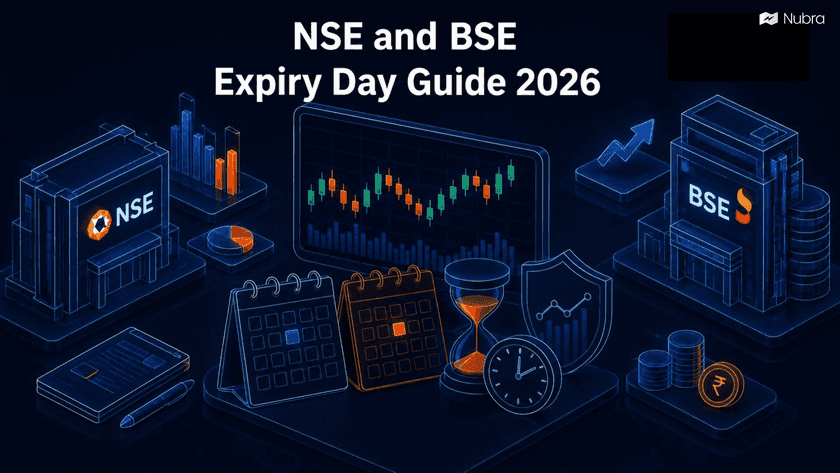
NSE and BSE Expiry Day Guide 2026
Expiry day in India is no longer one big Thursday habit. In 2026, the F&O calendar is split more cleanly: NSE runs on a Tuesday expiry cycle, while BSE runs on a Thursday expiry cycle. That sounds like a small calendar change until you are holding a weekly option on Monday afternoon and realise your…

What is swing trading in stock market: Meaning, key strategies & tools
Imagine you bought a new pair of shoes on sale and noticed they went on sale again just a week later. As a swing trader, you might have waited to buy them at the lower price, capitalizing on the price fluctuation.
Swing trading is a popular trading strategy that aims to capture gains in a stock (or other financial instruments) over a period of a few days to several weeks. Unlike day trading, which involves quick trades within the same day, or long-term investing, which focuses on buy-and-hold strategies, swing trading falls somewhere in between.
This article delves into the intricacies of swing trading, exploring its definition, strategies, tools, and potential risks and rewards.