
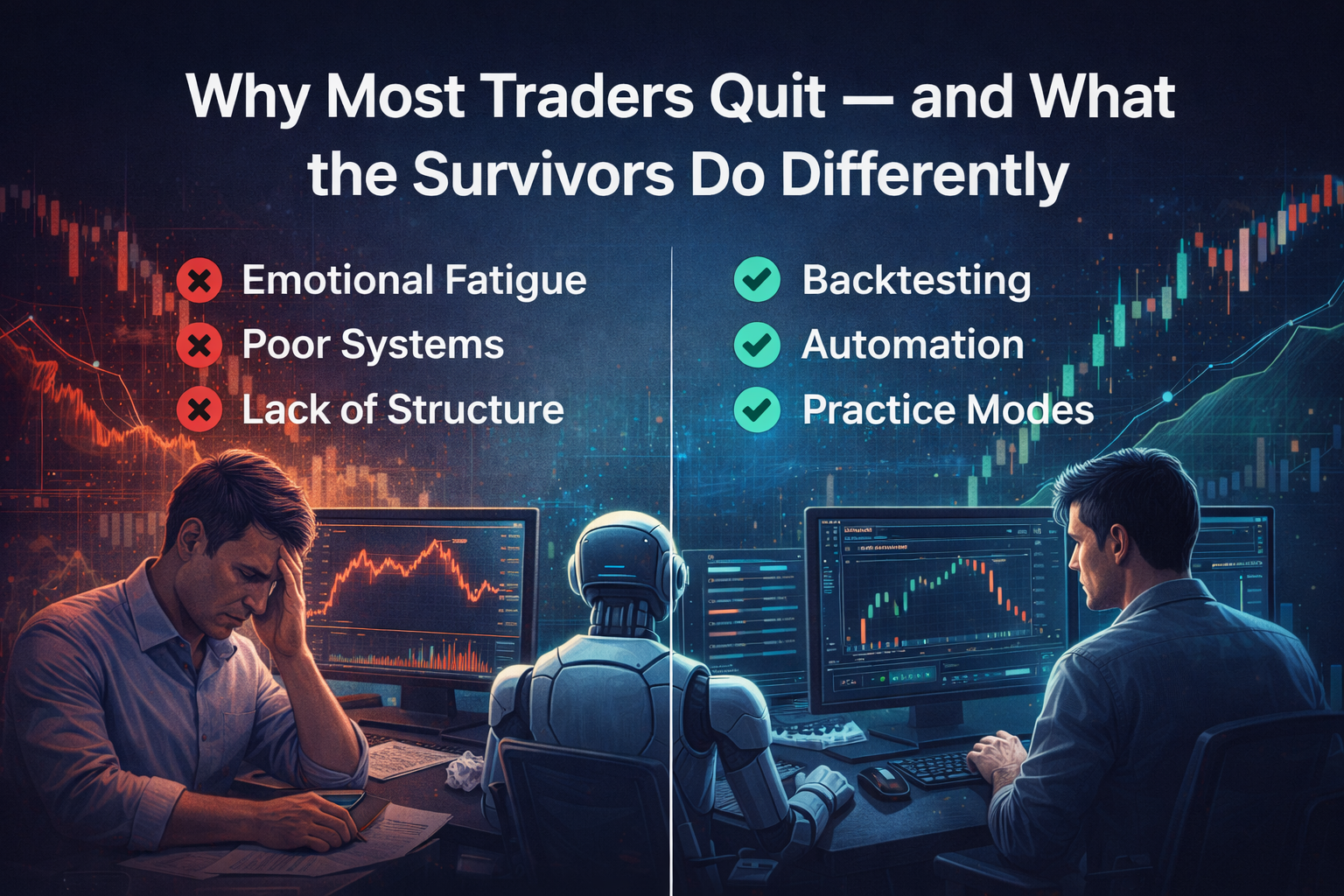
Why Do So Many Traders Quit?#
Trading seems simple at first:
Buy low, sell high, repeat.
But in reality, most traders quit within their first 6–12 months.
Why?
Not because the market is unbeatable — but because their process is broken.
The Real Reasons Traders Burn Out#
😤 Emotional Fatigue#
- Fear after a loss
- Revenge after a miss
- Anxiety when markets move fast
- Dopamine spikes from wins that lead to overtrading
This emotional rollercoaster wears traders down quickly.
❌ No Defined System#
Many traders operate like this:
“Let’s see how the chart looks today…”
They trade based on feeling, not rules. And when a few trades go wrong, there’s no structure to fall back on.
📉 Poor Risk Management#
- No fixed position sizing
- No stop-loss discipline
- Using full capital on one idea
- Letting losses run “just in case it comes back”
Without clear limits, one bad day can erase weeks of effort — or more.
🌀 Lack of Review and Feedback#
If you don’t track what’s working (or failing), how can you improve?
Most traders don’t review their performance. They just move on to the next trade.
What Successful Traders Do Differently#
Survivors don’t trade harder — they trade smarter.
Here’s what they build into their process:
1. 🧪 They Backtest Ideas Before Going Live#
Before risking capital, they test strategies:
- On historical data
- In simulated environments
- With clear entry/exit rules
This builds confidence in the idea and avoids blind spots.
2. 🛠️ They Use Tools to Add Structure#
- UAT environments for testing under real market conditions
- Dashboards that track open positions and risk
- APIs to remove human error and emotional entry
Structure reduces decision fatigue — and improves consistency.
3. 📓 They Journal and Track Performance#
Winning traders know:
- What their win rate is
- What time of day they perform best
- Which setups work consistently
Even simple notes or screenshots after trades can reveal patterns over time.
4. 🧠 They Set Rules — and Follow Them#
A system isn’t just for entries. It includes:
- Position size caps
- Daily loss limits
- Strategy kill-switches
- Time-blocked trading hours
This prevents impulsive behavior during high emotion.
5. ⏱️ They Use Practice Modes Before Going Live#
No one would fly a plane without a simulator.
Trading should be the same.
Using tools like UAT (User Acceptance Testing), traders can:
- Run their exact strategy
- With real-time market data
- But using virtual capital
This helps debug mistakes, optimize logic, and reduce surprises in live mode.
Final Takeaway#
Most traders don’t quit because the market is unfair.
They quit because they’re unprepared for the mental and structural demands of trading.
The traders who survive build systems:
- Tools to reduce emotion
- Environments to test safely
- Rules they actually follow
Success in trading isn’t about predicting the future.
It’s about being ready for it — over and over again.
Build your structure.
Then stick around long enough to let it work.