API trading lets us connect trading software to a broker’s systems to retrieve market data, send orders and monitor positions. API stands for application programming interface: the connection through which software exchanges requests and responses. Instead of entering every order manually, we can send instructions through a program. The API carries those instructions; our trading…
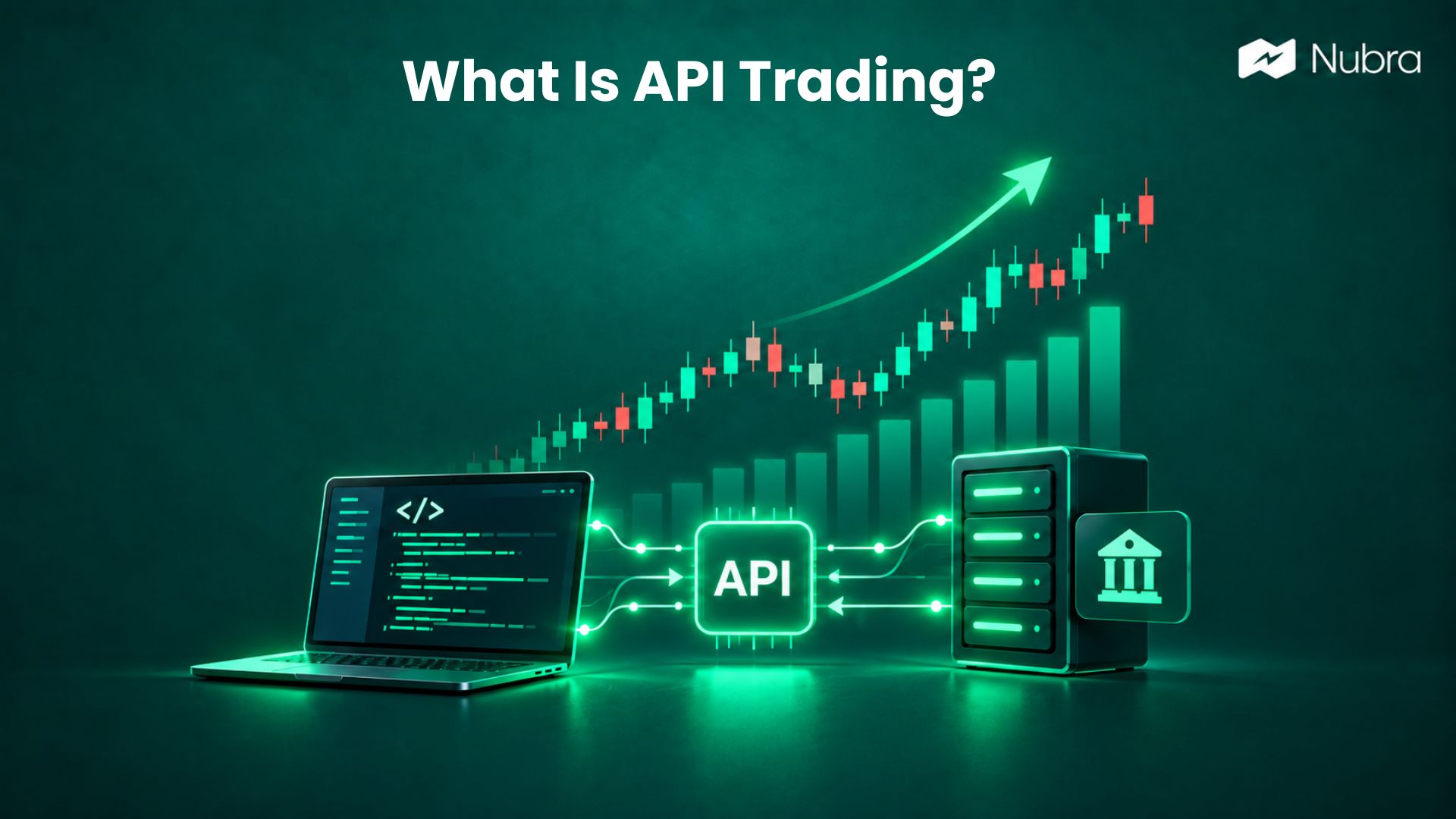
API trading lets us connect trading software to a broker’s systems to retrieve market data, send orders and monitor positions. API stands for application programming interface: the connection through which software exchanges requests and responses.
Instead of entering every order manually, we can send instructions through a program. The API carries those instructions; our trading rules determine when to act. It does not choose profitable trades for us.
How Does API trading work?
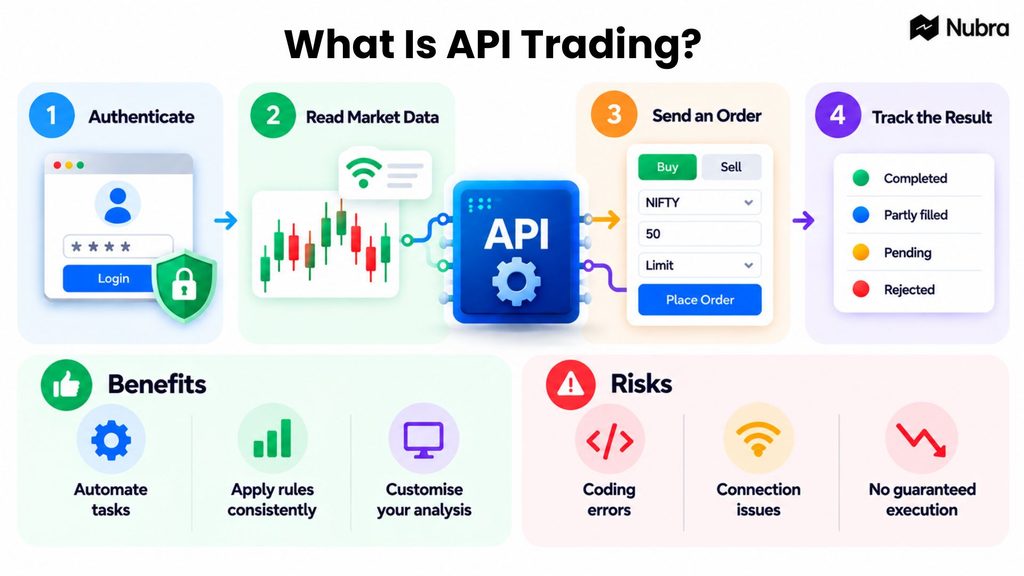
We can understand the process in four steps:
1. Authenticate: Complete the broker’s login process to authorise access. Keep credentials and session tokens private.
2. Read market data: Retrieve prices or receive streaming updates. A price snapshot and a continuous feed serve different purposes.
3. Send an order: Our software submits the instrument, quantity and other required details. The broker applies its checks before routing an eligible order to the exchange.
4. Track the result: Check whether the order is pending, rejected, partly filled or completed. An accepted request does not mean a completed trade.
Suppose our example program sends a buy limit order at ₹500. That price sets the maximum we are willing to pay; it does not guarantee a fill. If the connection drops, we should check the order’s status before resending it, to avoid a duplicate.
What Can We Do With a Trading API?
We can build dashboards, monitor positions and automate defined trading rules. REST APIs commonly handle individual requests, while WebSocket connections deliver ongoing updates. Our guide to building a live market data pipeline explores the data side in more detail.
API trading and algorithmic trading are related but different. The API provides the connection; an algorithm supplies the rules for making trading decisions.
What are the Benefits and Risks?
Automation can reduce repetitive typing and help us apply rules consistently. It also allows us to customise analysis around our own process.
However, a coding error can repeat as consistently as a valid instruction. Delayed data, expired sessions and connection failures can disrupt trading. Faster submission cannot guarantee execution, a particular price or profits. Our guide to API errors, retries and rate limits explains why failed requests need careful handling.
How can We Explore API Trading with Nubra?
We can begin with our Nubra API getting-started guide and test integrations in Nubra’s user acceptance testing (UAT) environment before live use. Testing does not reproduce every live-market condition.
For visual analysis, we can inspect contracts in Nubra Option Chain, model options combinations in Nubra Strategy Builder, and study price movements with Nubra Charts. These tools support analysis; they do not guarantee outcomes or automatically turn an idea into API code.
Before connecting a live system, we should confirm applicable access requirements, charges and supported features in the latest Nubra API documentation.
FAQs
Do We Need Coding Skills for API Trading?
Building our own integration generally requires programming knowledge. A compatible third-party tool may handle the code, but we still need to understand its permissions and trading rules.
Can API Trading Run Without Supervision?
Automation still needs monitoring. We need a way to pause new orders and check open positions when data or connectivity fails.
How is API Trading Different From Algorithmic Trading?
An API connects our software to a broker. An algorithm defines the rules for trading decisions. We can use an API to retrieve data without automating trades.
Can We Test an API Integration Before Trading Live?
We can test integrations in Nubra’s user acceptance testing (UAT) environment before live use. This helps us check how our software behaves, but it cannot reproduce every live-market condition.
Does API Trading Guarantee that an Order will be Executed?
No. Sending an order is different from completing a trade. We need to monitor its status because it may remain pending, be rejected or fill only partly.
Disclaimer: The information provided in this blog is for educational and informational purposes only and should not be construed as investment advice, financial advice, or a recommendation to buy, sell, or hold any securities or financial products. Investments in the securities market are subject to market risks. Please read all related documents carefully before investing. Readers should conduct their own research and consult a SEBI-registered investment adviser or other qualified financial professional before making any investment decisions. Past performance is not indicative of future results.