Best execution means seeking favourable terms for a customer’s order under prevailing market conditions. Price matters, alongside costs, speed and the likelihood of completing the trade. When we assess our execution, we look beyond the price on screen. We need to know what quantity actually traded, at what price and with what charges. What Affects…
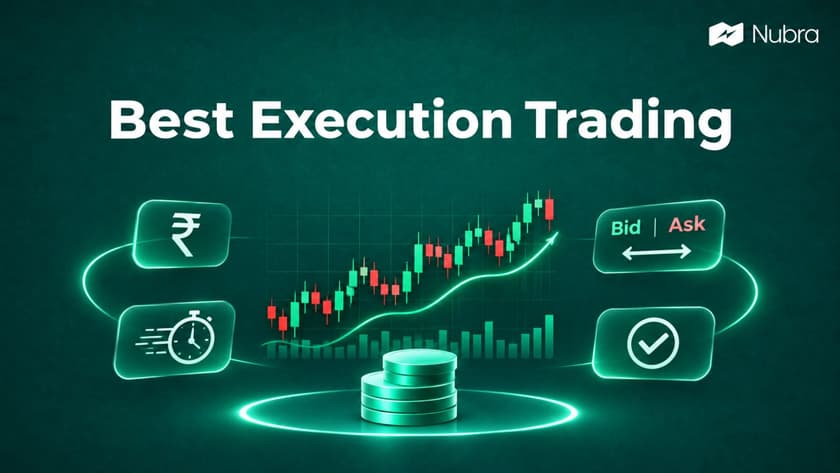
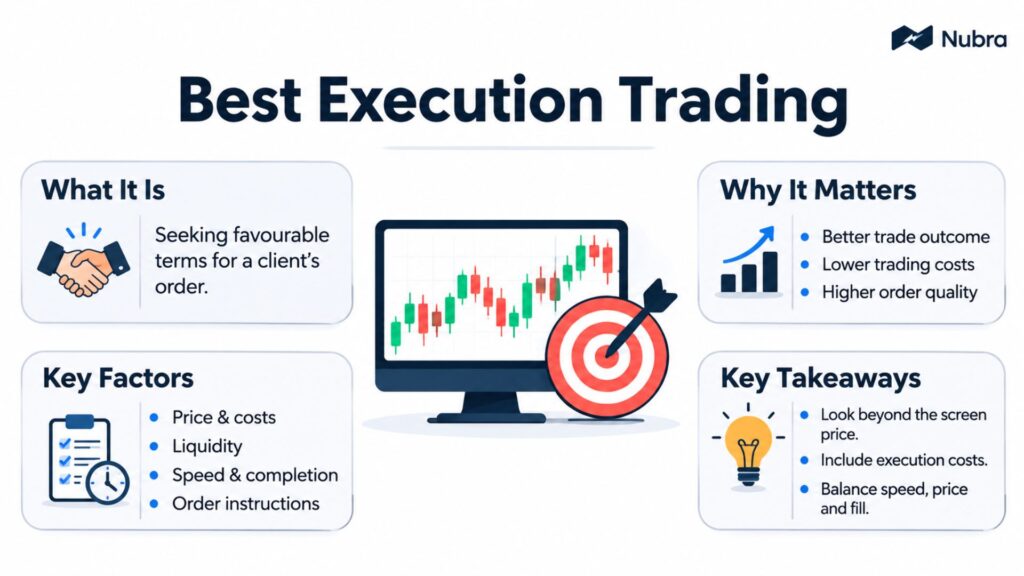
Best execution means seeking favourable terms for a customer’s order under prevailing market conditions. Price matters, alongside costs, speed and the likelihood of completing the trade.
When we assess our execution, we look beyond the price on screen. We need to know what quantity actually traded, at what price and with what charges.
What Affects Execution Quality?
We can examine four connected factors:
- Price and costs: the actual buying cost or selling proceeds after applicable charges.
- Liquidity: the quantity available near our intended price. The bid–ask spread is the gap between the highest quoted buying price and lowest quoted selling price.
- Speed and completion: how quickly the requested quantity fills, including any partial fills.
- Order instructions: a market order seeks available prices; a limit order sets a price boundary but may remain unfilled.
We should avoid treating speed as proof of quality. A quick fill can still be unfavourable. Our guide to fast trade execution explores that distinction.
A Simple Execution Example
Suppose we intend to buy 200 shares at ₹400. If 100 fill at ₹400 and another 100 at ₹401, our average purchase price is ₹400.50.
We pay ₹80,100 before charges, compared with ₹80,000 at our reference price. That ₹100 difference is adverse slippage in this hypothetical example. Slippage can also favour us.
We include execution costs when assessing a trade’s potential outcome, as explained in our guide to the risk/reward ratio.
How Do Broker Rules Fit In?
Best execution is also a broker obligation in jurisdictions such as the US. FINRA Rule 5310 requires member firms to exercise reasonable diligence when seeking favourable customer execution terms.
We should distinguish that US rule from Indian market arrangements. NSE’s equity market uses order matching with price-time priority: better prices take precedence, followed by earlier orders at the same price. Available matching quantity still matters.
How We Can Use Nubra’s Tools
After understanding execution, we can examine contracts using Nubra Option Chain, which displays prices, volume, open interest and Greeks. Open interest alone does not establish available quantity at our price.
Nubra Strategy Builder helps us examine multi-leg positions and payoff scenarios. Nubra Charts provides price context in the trading terminal. Access may require sign-in.
These tools support analysis; they cannot guarantee fills or returns. Our guide to automated trading platforms explains why analysis and automated execution serve different roles.
FAQs
Does Best Execution Mean the Best Price Every Time?
No. Market conditions, available quantity and order instructions affect what is achievable.
Is Faster Execution Always Better?
No. We also consider the fill price, charges and completed quantity.
Do Limit Orders Remove Execution Risk?
No. They control the acceptable price, but part or all of our order may remain unfilled.
Is the Last Traded Price Our Execution Price?
Not necessarily. It records an earlier trade; quotes can change before our order matches.
Why Do Partial Fills Matter for Options?
If only some legs fill, our actual position can differ from the planned strategy.
How Can We Review Our Execution?
We record a consistent reference price, average fill, completed quantity, completion time and charges, then compare similar trades.
Disclaimer: The information provided in this blog is for educational and informational purposes only and should not be construed as investment advice, financial advice, or a recommendation to buy, sell, or hold any securities or financial products. Investments in the securities market are subject to market risks. Please read all related documents carefully before investing. Readers should conduct their own research and consult a SEBI-registered investment adviser or other qualified financial professional before making any investment decisions. Past performance is not indicative of future results.