A grey market is an unofficial market where IPO shares or IPO applications are bought and sold before the shares are listed on a recognised stock exchange. It is called “grey” because it sits outside the regular exchange-traded market. It is not the same as buying or selling shares on NSE or BSE after listing.…
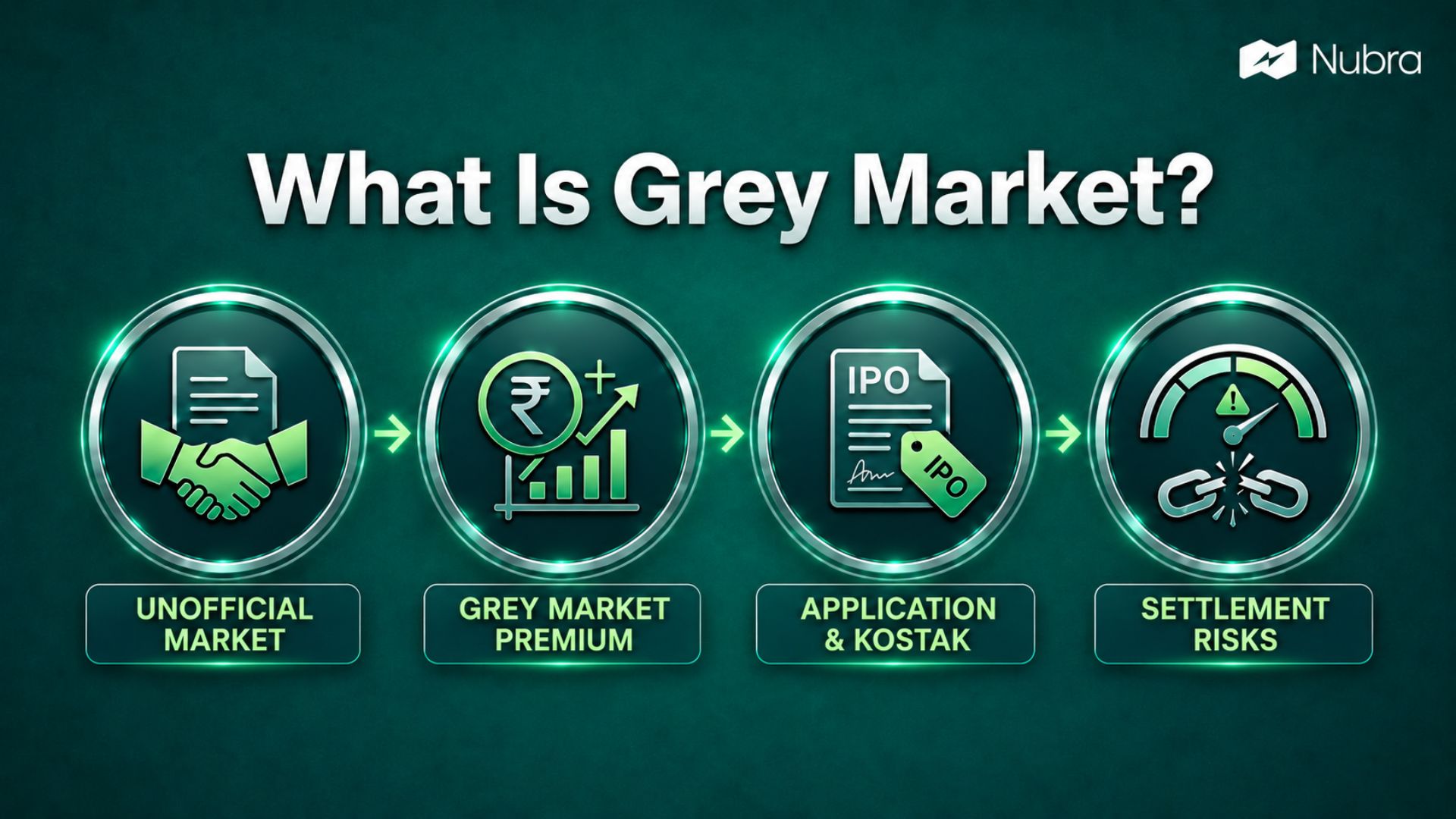
A grey market is an unofficial market where IPO shares or IPO applications are bought and sold before the shares are listed on a recognised stock exchange. It is called “grey” because it sits outside the regular exchange-traded market. It is not the same as buying or selling shares on NSE or BSE after listing.
In India, the phrase usually comes up during IPO season. Before an IPO lists, traders may quote informal prices for the shares or for the applications. These quotes are used by some market participants to judge listing sentiment. We should read them as an informal mood indicator, not as a confirmed listing price or a guaranteed return.
How Does the Grey Market Work?
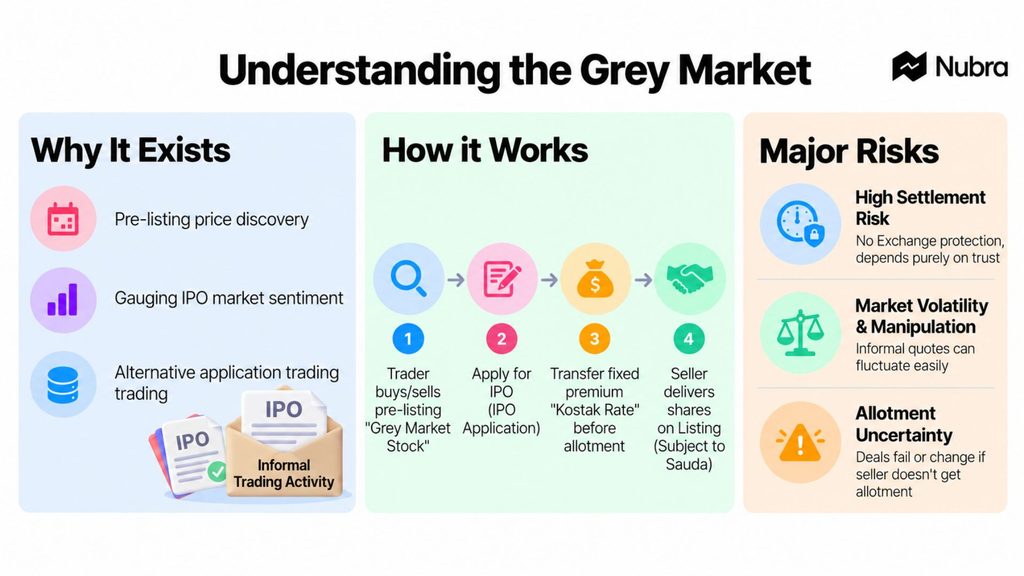
The IPO grey market works through informal dealers and trust-based arrangements. A person who has applied for an IPO may agree to sell the allotted shares at a premium before listing. Another person may want exposure to the IPO even before it starts trading officially. The dealer connects both sides.
The actual share transfer cannot happen in the regular market until allotment and listing are complete. If the seller does not receive allotment, the deal may not go through. If the listing price moves sharply against expectations, either side may face settlement risk because the trade is not protected like an exchange trade.
That is why grey-market activity should be treated carefully. It can show demand and supply interest, but it does not offer the transparency, surveillance, or formal settlement process that we expect from the regulated market.
What Is Grey Market Premium?
Grey market premium, or GMP, is the extra amount at which an IPO share is quoted over its issue price in the unofficial market.
The simple formula is:
GMP = Grey market price – IPO issue price
For example, if an IPO is priced at ₹200 and the quoted GMP is ₹50, the grey market is informally suggesting a price of ₹250. This does not mean the stock will list at ₹250. The actual listing price can change because of market sentiment, subscription levels, valuation, business fundamentals, broader index movement, and news flow before listing.
GMP can also turn negative. If an IPO priced at ₹200 is quoted at ₹180 in the grey market, the GMP is -₹20. That suggests weaker sentiment, but it still does not guarantee a discounted listing.
Grey Market Stock, IPO Applications and Kostak Rates
In IPO discussions, we usually see three related terms.
| Term | Meaning | What to remember |
|---|---|---|
| Grey market stock | IPO shares quoted informally before listing | Settlement depends on allotment and post-listing transfer |
| IPO application trade | Buying or selling the IPO application itself | The buyer is taking exposure to whether allotment happens |
| Kostak rate | A fixed amount paid for an IPO application before allotment | The seller may receive the fixed amount even if the final listing gain is higher |
Some traders also use the phrase “subject to sauda”. In simple terms, it means the deal depends on whether allotment is received. These arrangements can sound straightforward, but the risk sits in the details: allotment uncertainty, price movement, trust between parties, and no regulated exchange settlement layer.
Why Do Traders Track Grey Market Activity?
Traders track grey-market activity because IPOs have a short window between application, allotment and listing. A live exchange price does not exist during that period, so people look for proxy signals. GMP becomes one such proxy.
But we should not give it more importance than it deserves. A high GMP may reflect strong demand, thin informal activity, aggressive speculation, or changing sentiment. A low GMP may suggest caution, but it may not capture long-term fundamentals. The better approach is to combine IPO details, valuation, business quality, subscription data, market conditions, and risk appetite instead of depending on one unofficial number.
For listed options and F&O analysis, this is where a regulated workflow matters more. On Nubra, traders can use the option chain to study strikes, open interest, volume and Greeks, the strategy builder to model multi-leg scenarios, and charts to analyse price behaviour. These tools help with market analysis and planning, but they do not predict outcomes or remove trading risk.
Risks of Relying on the Grey Market
The biggest risk is mistaking an informal quote for a reliable price. Grey-market numbers can change quickly, and there is no official order book showing the full depth of buyers and sellers. The price may be influenced by limited deals, rumours, promotional activity, or short-term sentiment.
There is also settlement risk. Since the market is unofficial, the comfort comes from personal trust rather than exchange-backed settlement. If allotment does not happen, the trade structure may change. If the listing price is very different from the quoted GMP, disputes can arise.
For investors, the cleaner habit is to treat GMP as one input, not the decision itself. If we are studying an IPO, we should still read the offer document, understand the business model, check valuations, compare peers, and think about whether the position fits our risk tolerance.
The same discipline applies in trading. Before acting on any market signal, it helps to understand risk and reward, know how open interest behaves, and understand how option premium is formed. If a trader uses options around a listed stock after debut, the option chain guide and option strategy builder guide can help organise the analysis more clearly.
FAQs
Is Grey Market Trading Legal in India?
The grey market is unofficial and outside the normal stock exchange mechanism. It is not backed by the exchange settlement process. Anyone reading grey-market quotes should understand that these are informal signals, not regulated exchange prices.
Is GMP a Guarantee of Listing Gains?
No. GMP is not a guarantee. It can indicate sentiment, but the actual listing price depends on market conditions, demand, valuation, company fundamentals and other factors.
What Does a Negative GMP Mean?
A negative GMP means the grey-market quote is below the IPO issue price. It may suggest weak sentiment, but it still does not guarantee that the IPO will list at a discount.
Should We Apply for an IPO Only Because GMP is High?
No. A high GMP can be tempting, but it should not be the only reason to apply. We should also look at the company, valuation, financials, risk factors, subscription trend and broader market conditions.
How is the Grey Market Different from the Stock Market?
The stock market is regulated, exchange-traded and formally settled. The grey market is informal, trust-based and not supported by the same exchange infrastructure.
Disclaimer: The information provided in this blog is for educational and informational purposes only and should not be construed as investment advice, financial advice, or a recommendation to buy, sell, or hold any securities or financial products. Investments in the securities market are subject to market risks. Please read all related documents carefully before investing. Readers should conduct their own research and consult a SEBI-registered investment adviser or other qualified financial professional before making any investment decisions. Past performance is not indicative of future results.