Direct market access, or DMA, lets an authorised client send orders electronically to an exchange trading system through a broker’s infrastructure without a dealer entering each order manually. We control the order instructions, while the broker still provides the market connection, applies required risk checks and keeps the necessary records. That distinction matters. DMA gives…
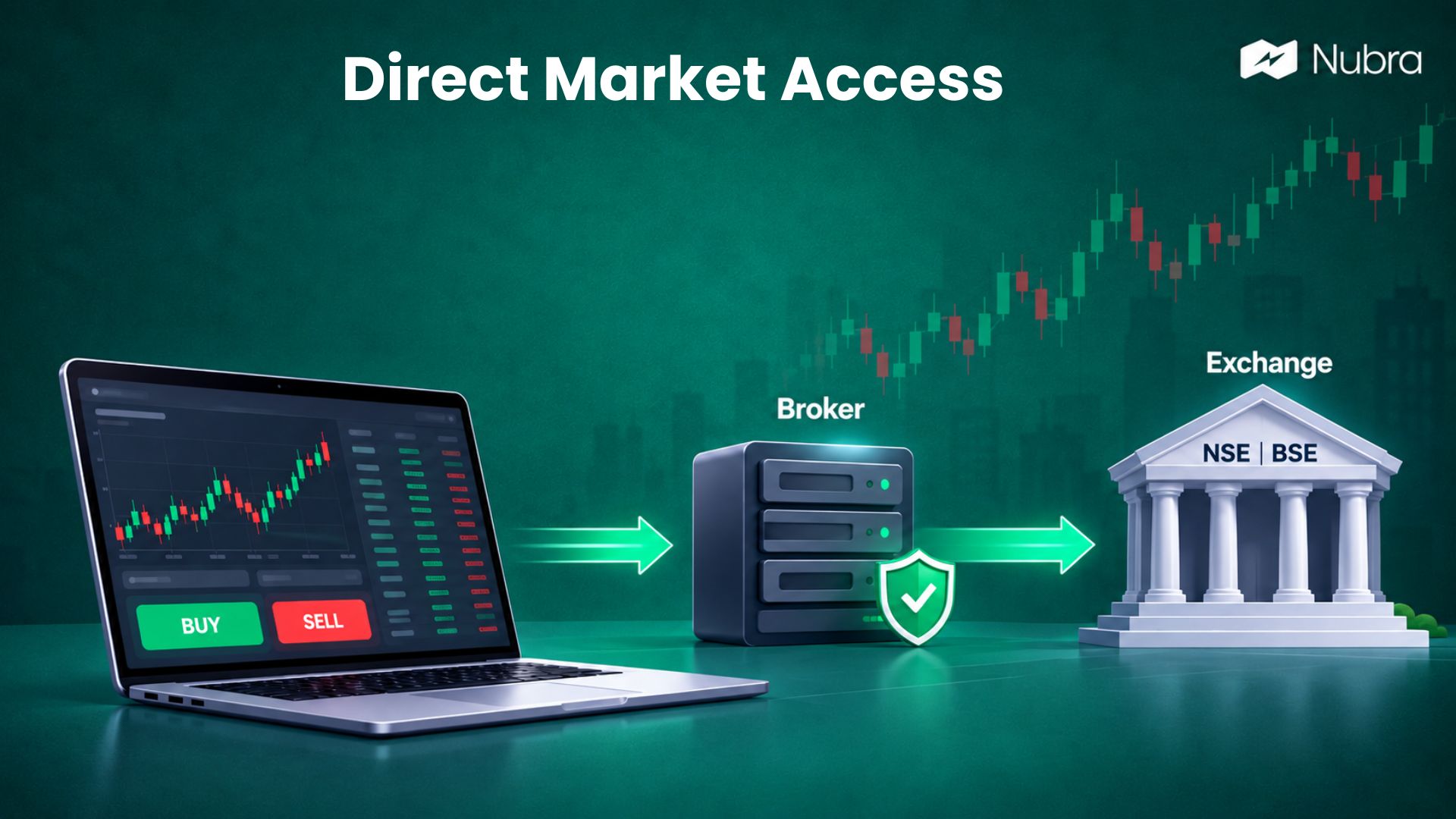
Direct market access, or DMA, lets an authorised client send orders electronically to an exchange trading system through a broker’s infrastructure without a dealer entering each order manually. We control the order instructions, while the broker still provides the market connection, applies required risk checks and keeps the necessary records.
That distinction matters. DMA gives us more direct control over how an order reaches the exchange, but it does not remove the broker or the exchange’s rules. It also does not guarantee that an order will fill, execute at a particular price or produce a profit.
How Direct Market Access Works
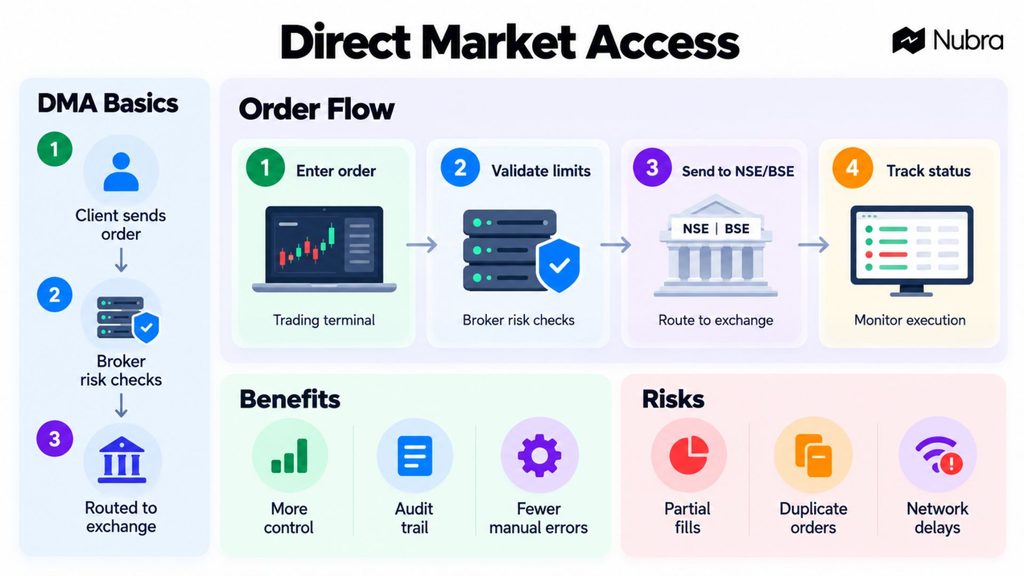
A DMA order usually follows a short electronic route:
- We enter the instrument, side, quantity, price and order type in an authorised DMA system.
- The broker’s system checks the order against permissions, position limits and other risk controls.
- If the order passes those checks, the system routes it to the exchange order book without manual dealing-desk entry.
- The exchange accepts, rejects or matches the order according to its rules.
- We monitor whether the order is open, partly filled, fully filled, cancelled or rejected.
Suppose we place a limit order to buy 1,000 shares at ₹500. The exchange may fill 300 shares and leave the balance open. A direct route has not changed the liquidity available at ₹500. We still need to manage the remaining quantity and the exposure created by the partial fill.
DMA and Ordinary Broker Trading
With an ordinary broker interface, we submit an order to the broker, and the broker’s systems route an eligible instruction to the exchange. DMA also uses the broker’s infrastructure, but an authorised client can control the electronic order flow without a dealer manually re-entering the instruction.
This can reduce manual-entry errors and shorten the route between the client’s system and the exchange. It can also give eligible trading desks more direct control over electronic order submission, subject to the provider’s setup, available order types and market controls. This is not a promise of faster execution or a better price on every order.
DMA is also different from API trading. An API is a way for software to communicate with a broker’s system. An API order may still travel through the broker’s standard routing process. DMA describes the market-access arrangement, not simply the presence of an API. Our guide to the basics of algorithmic trading explains how programmed rules can generate and manage orders, while DMA concerns how an authorised order reaches the exchange.
Benefits and Risks of Direct Market Access
DMA can give a trading desk closer control over order timing and order-book interaction. Electronic instructions also create an audit trail that can help a firm review who sent an order, when it was sent and how the market responded.
The same directness increases operational responsibility. A typing error, faulty algorithm or duplicated request can reach the market quickly unless controls stop it. Network failures, stale data and delayed order updates can also leave us with an inaccurate view of open orders or positions.
An accepted order and a completed trade are different events. If a response is delayed, sending the same instruction again may create a duplicate. If only one leg of a hedge fills, the unfilled leg can leave an unintended position. Our explanation of bid and ask prices shows how available quantity and the spread affect what can trade. The guide to algorithmic and automated intraday trading explains why order status, position limits and pause rules matter as much as the entry signal.
Direct Market Access in India
In India, DMA eligibility depends on applicable SEBI and exchange requirements, the market segment and the broker’s approval. Access is not simply a setting that any trader can switch on. A broker offering DMA may apply permissions, pre-trade risk controls and record-keeping requirements under the applicable framework.
Before planning a DMA workflow, we should confirm current eligibility, permitted connectivity, charges and operational requirements with the broker and the relevant exchange. A normal retail terminal or order-entry API should not be assumed to provide DMA.
Using Nubra Tools for Market Analysis
DMA describes order routing. It does not replace the analysis needed before we send an order. For options, we can use Nubra Option Chain to review option-chain data such as open interest, implied volatility and Greeks. We can compare multi-leg payoff scenarios in Nubra Strategy Builder and study price action with Nubra Charts.
These tools help us examine a setup and its possible outcomes. They do not confirm DMA eligibility, predict the market or guarantee execution. DMA availability should be verified separately with the provider.
FAQs
Is DMA the Same as API Trading
No. An API lets software communicate with a broker’s system. DMA is a specific access arrangement through which an authorised client’s orders reach an exchange through the broker’s infrastructure without manual dealer entry.
Does DMA Bypass the Broker
No. The order still travels through the broker’s approved infrastructure and risk controls. DMA removes manual intervention from the normal order path; it does not remove the broker’s responsibilities.
Is DMA Available to Retail Traders in India
DMA is not the same as a standard retail terminal or trading API. Eligibility depends on the applicable market, exchange framework and broker approval, so we should confirm the latest requirements with the broker and exchange.
Does DMA Guarantee Faster Execution
No. DMA can reduce manual handling, but actual execution depends on system performance, exchange conditions, liquidity, order type and price. An order may still be rejected, remain open or fill only partly.
Disclaimer: The information provided in this blog is for educational and informational purposes only and should not be construed as investment advice, financial advice, or a recommendation to buy, sell, or hold any securities or financial products. Investments in the securities market are subject to market risks. Please read all related documents carefully before investing. Readers should conduct their own research and consult a SEBI-registered investment adviser or other qualified financial professional before making any investment decisions. Past performance is not indicative of future results.